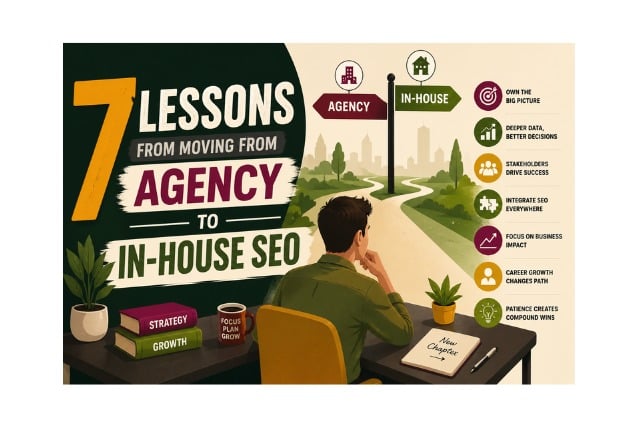
Did you ever feel lost after switching roles and wonder how SEO changed when you moved from agency work to an in-house team? Many marketers faced these moments when they worked on “7 Lessons From Moving From Agency To In-House SEO” and saw how much the environment changed their SEO approach.
More so, moving from an agency role to an in-house SEO position often changed how work got planned, executed, and measured. In agencies, SEO experts usually handle multiple clients with fast deadlines. In-house SEO focused on one brand, deeper goals, and long-term growth.
So, professionals discovered fresh realities during this journey. Success depended more on internal collaboration, patience, and brand understanding than on quick wins. The shift reshaped how SEO strategies are built and maintained.
What Does Moving from Agency to In-House SEO Really Mean?
You change more than your job title in this move. Agencies force you to juggle many clients at once. Each month brings new sites, fresh problems, and tight deadlines.
More so, you focus on one brand every single day now. You wake up and improve the same website consistently. Your decisions shape the customer journey for years ahead.
Clients pay agencies for deliverables and reports only. Your company measures you by actual business results instead. You own every win and every miss directly.
So, many professionals choose the agency-to-in-house SEO transition after three to five years. They feel ready for stability plus deeper strategy work. The role shifts from vendor status to core team member.
Why SEO Professionals Search for “Agency to In-House SEO Transition”
Search data reveals steady interest in this topic. SEOs, digital marketers, and mid-level specialists type these queries often. They stand at important career crossroads right now.
In addition, some professionals feel burned out from long agency hours. Others want to escape constant pitching and weekly reporting cycles. The current job market plays a major role here.
So, companies build bigger in-house teams these days. They need experts who grasp quick tactics and long-term SEO strategy together. Readers seek honest answers to their doubts.
They wonder about boredom from less variety in projects. They question slower decisions and possible changes in pay or balance. These real questions drive ongoing searches.
Key Differences Between Agency SEO and In-House SEO
Agency life moves at high speed daily. You deliver campaigns across many industries at once. You learn quickly because every client brings fresh challenges.
In-house work goes much deeper overall. You master one site, one audience, and one product set. Data access improves dramatically in most cases.
Furthermore, agencies push quick wins to impress clients fast. In-house projects require stakeholder sign-off before changes. Results compound stronger even when changes take longer.
Reporting looks different between the two environments. Agencies create polished slides every single week. In-house teams track dashboards tied directly to revenue and leads.
Scope changes:
- Many clients vs one single brand
Focus changes:
- Deliverables vs business outcomes
Access changes:
- Limited data vs full tools and systems
Pace changes:
- Fast cycles vs patient execution
These SEO role differences surprise most people who make the switch.

No Tech Jargon. Just More Customers.
We aren’t here to hide behind abstract technical metrics to mask a lack of results. Most agencies use complex algorithmic jargon just to confuse you and justify overcharging. JoseOne enjoys literally 100% client retention because, nothing is expensive when it’s worth what you pay for it.
Lesson 1: From Optimizing Clients to Owning a Brand
You stop tweaking sites for someone else now. You own the brand story in search results.
Accountability feels heavier yet more rewarding daily. Traffic drops force you to investigate causes quickly. Rankings rise, and you celebrate real company growth.
In addition, ownership pushes you toward smarter decisions always. You think months and years ahead of each campaign. Brand knowledge grows with every passing week.
Thus, you understand customer pain points at a deeper level. Many call this the biggest mental shift during the agency-to-in-house SEO transition. You move from expert advisor to true steward of growth.
Lesson 2 & 3: How Deeper Data Access and Patience Change Your SEO Game
Data access transforms how you approach daily work. Agencies show you surface numbers in most reports. In-house roles let you explore full user paths and revenue details.
You build a stronger in-house SEO strategy with solid facts. One deep analysis reveals opportunities agencies rarely notice.
Meanwhile, patience grows into an essential new skill for you. Agency life trains fast cycles and quick reports. In-house success demands more time and steady effort.
You learn to plant seeds today for future quarters. Rankings hold longer with this approach. Traffic quality improves over consistent months. Better data combined with calm execution creates your most effective long-term SEO strategy.
Lesson 4: Stakeholder Management – The Most Underrated Skill in In-House SEO
Success depends on people as much as keywords now. You work daily with product managers, developers, writers, and leadership.
Besides, clear communication wins support every single time. You explain changes using simple business language. You align SEO goals with product roadmaps and marketing plans.
SEO team collaboration turns into a daily practice for you. You join meetings and push for early SEO input on launches.
Strong relationships convert bottlenecks into a smooth in-house SEO workflow. So, this skill separates good in-house SEOs from truly great performers.
Lesson 5 & 6: Shifting from SEO Deliverables to Real Business Outcomes and Integrated Strategy
Rankings still matter, but they no longer rule your week. You track revenue, leads, conversions, and customer retention closely.
More so, your reports answer one central question each time. How did SEO move the business forward? So, this new focus feels refreshing after years of vanity metrics.
SEO connects with other departments instead of staying isolated. You partner with content teams for stronger pages. UX experts help improve crawl paths and user signals.
In addition, paid media and organic efforts support each other better. Product decisions include SEO input right from day one. Your in-house marketing SEO tips help the whole team win together.
Lesson 7: How Your Career Growth Changes Direction in In-House SEO
Career paths look different inside companies. Agencies reward fast promotion through client wins and new skills. In-house roles value depth plus leadership abilities.
So, you might specialize in technical SEO or content strategy. You can also grow into SEO leadership roles. Stability improves for many professionals.
You build equity in one brand and track impact over the years. Growth feels steadier with cross-functional skills. These abilities open doors to head of marketing or digital positions later.
Frequently Asked Questions
What changed the most when moving from agency to in-house SEO?
The biggest change was focus. Agency work handled many clients, while in-house SEO focused on one brand and long-term growth.
Was in-house SEO easier than agency work?
It was not easier. It became more focused but also required deeper planning, communication, and patience.
Why did SEO strategies change after switching roles?
Strategies changed because in-house teams worked closely with product, content, and marketing teams, which influenced decisions more directly.
Did tools and processes stay the same in both roles?
Some tools stayed the same, but reporting systems, KPIs, and workflows often changed based on company structure.
What skill mattered most in in-house SEO?
Communication mattered the most because SEO decisions depended on collaboration with multiple internal teams.
Conclusion
Lastly, the shift from agency to in-house SEO created a major learning curve. Marketers who worked through “7 Lessons From Moving From Agency To In-House SEO” understood that success came from long-term thinking, stronger teamwork, and deeper brand involvement. Instead of fast results, in-house SEO rewarded consistency and strategic planning.
Simple Affordable Rates
At JoseOne, we keep it simple. You don’t need a degree in search engine mechanics—you just need more traffic, more phone calls, and more sales. We offer one, fully-loaded package for just $3 per day, to get your business ranking higher on Google, with a 100% Money-Back Guarantee. We handle the technical heavy lifting so you can focus on running your business.