Did you buy a new software tool last year that failed to deliver on its promises? Spending money on technology feels frustrating when the product fails to support your daily work.
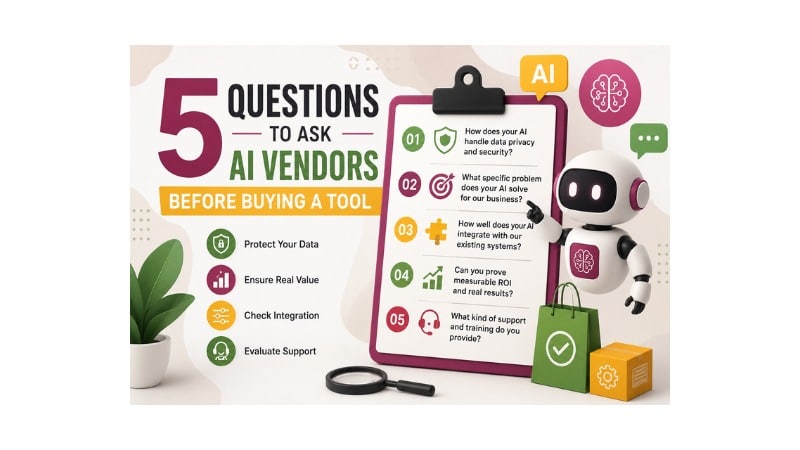
How can your business avoid another costly software mistake? Learning the 5 questions to ask AI vendors before buying a tool helps you choose reliable software that supports long-term business success.
Every business wants technology that saves time, improves productivity, and supports future growth. Choosing an AI tool without proper research can create security risks, hidden costs, and daily challenges.
Many companies once selected software after watching polished demonstrations and listening to impressive sales presentations. Modern buyers now understand that attractive features alone never guarantee lasting value.
Asking the 5 questions to ask AI vendors before buying a tool helps businesses compare vendors with confidence before signing contracts. Smart decisions protect company budgets while helping employees work more efficiently with dependable artificial intelligence solutions.
Why Businesses Search for AI Vendor Buying Advice
First, artificial intelligence has become an important part of modern business operations across many industries. Companies now use AI tools for customer support, marketing, sales, finance, and project management.
Every investment affects daily work, making careful software selection more important than ever before. Business owners often search for trusted buying advice because every vendor promises outstanding performance and valuable features.
More so, reliable guidance helps buyers separate realistic solutions from impressive marketing claims.
Search interest continues growing because organizations want software that delivers measurable business value instead of unnecessary complexity.
Buyers also compare security standards, pricing models, customer support, and system compatibility before making final decisions. Strong research helps businesses reduce financial risks while improving long-term technology investments.
Why Choosing the Right AI Vendor Matters
Next, selecting the right AI vendor influences productivity, security, customer satisfaction, and future business growth. Every software decision affects employees long after the purchasing process ends.
Reliable vendors continue supporting customers through product improvements, technical guidance, and regular software updates. Strong partnerships help businesses solve problems faster while reducing unexpected operational disruptions.
Choosing the wrong provider creates unnecessary expenses and workflow challenges. Poor customer support, weak security practices, limited integrations, and hidden subscription costs often reduce the value of expensive software investments.
In addition, careful vendor evaluation protects your business from avoidable problems while increasing confidence throughout the purchasing process.

No Tech Jargon. Just More Customers.
We aren’t here to hide behind abstract technical metrics to mask a lack of results. Most agencies use complex algorithmic jargon just to confuse you and justify overcharging. JoseOne enjoys literally 100% client retention because, nothing is expensive when it’s worth what you pay for it.
Question One: What Business Problem Does Your AI Tool Solve?
Then, every successful software purchase begins with understanding the exact business problem requiring a solution. Artificial intelligence should simplify work instead of creating additional challenges for employees.
Vendors should clearly explain how their products solve specific business problems instead of discussing technical features alone. Real examples demonstrate practical value much better than impressive marketing presentations.
Ask vendors how their software improves daily operations and supports business goals. Request customer case studies from organizations similar to yours because industry examples provide stronger evidence.
Learn how quickly businesses achieve measurable improvements after implementation. Understanding expected results helps buyers determine whether the software matches current business needs.
Question Two: How Does the AI Tool Protect Business Data?
Meanwhile, protecting business information should remain a top priority before selecting any artificial intelligence platform. Companies trust vendors with customer records, financial information, employee details, and confidential business documents every day.
Strong security practices protect sensitive information while reducing legal and financial risks.
Ask vendors how they store company data, encrypt sensitive information, and prevent unauthorized access. Confirm whether they follow recognized privacy regulations and maintain recognized security certifications.
Thus, buyers should also understand data ownership policies, backup procedures, disaster recovery plans, and artificial intelligence training practices. Transparent answers build trust while helping businesses choose vendors that take security seriously.
Question Three: Can the AI Tool Work With Your Existing Systems?
Afterward, businesses should confirm that every new AI tool works smoothly with existing software. Poor integration often creates delays, duplicate work, and unnecessary frustration across different departments.
A reliable solution should connect easily with the systems your employees already use every day. Smooth integration saves time while helping teams complete tasks without changing their normal workflow.
Ask vendors whether the AI tool connects with your customer relationship management software, email platforms, accounting systems, or project management applications. Learn whether the platform offers API access for future integrations as your business grows.
Ask how long implementation usually takes and whether technical experts help during setup. Clear answers help businesses avoid expensive integration problems after purchasing new software.
Question Four: What Results and Return on Investment Can You Expect?
Furthermore, every technology investment should produce measurable business results instead of attractive marketing promises. Reliable vendors explain expected outcomes using real customer experiences and verified business performance.
Honest discussions help buyers understand whether the software matches company goals before making financial commitments.
Ask vendors how their customers measure success after implementing the platform. Request examples showing improvements in productivity, cost savings, customer satisfaction, or workflow efficiency. Learn how long businesses usually wait before seeing measurable results.
Discuss subscription costs, upgrade fees, implementation expenses, and future pricing changes before signing any agreement. Clear financial information helps organizations calculate the true value of every investment.
Question Five: What Support, Training, and Updates Are Included?
Additionally, excellent customer support remains important long after software implementation finishes successfully. Employees often need guidance while learning new systems during the first few weeks. Reliable vendors provide helpful training resources that improve user confidence and reduce technical problems.
Ask vendors how they train new customers and whether onboarding services are included within the purchase price. Learn which support channels remain available whenever employees need assistance.
Confirm expected response times for technical issues and ask how frequently software updates become available. Businesses should also ask whether dedicated account managers assist customers throughout the partnership.
Strong support helps organizations gain greater value from every artificial intelligence investment.
Red Flags to Watch for When Comparing AI Vendors
Businesses should remain alert while comparing different artificial intelligence providers because warning signs often appear before purchasing decisions.
Honest vendors answer questions openly and provide clear information without avoiding difficult conversations. Unclear answers usually create bigger challenges after implementation begins.
Watch for these warning signs:
- Hidden pricing or unexpected fees
- Weak security practices
- Poor customer reviews
- Limited product documentation
- No free trial or demonstration
- Few integration options
- Slow customer support
- Unrealistic performance promises
- Missing product roadmap
- No customer references
Recognizing these warning signs helps businesses avoid costly mistakes while selecting trustworthy software providers.
Simple Affordable Rates
At JoseOne, we keep it simple. You don’t need a degree in search engine mechanics—you just need more traffic, more phone calls, and more sales. We offer one, fully-loaded package for just $3 per day, to get your business ranking higher on Google, with a 100% Money-Back Guarantee. We handle the technical heavy lifting so you can focus on running your business.
How to Build an AI Vendor Comparison Checklist: 5 Questions to Ask AI Vendors Before Buying a Tool
Careful comparisons help businesses choose software based on facts instead of sales presentations alone. A structured evaluation keeps every decision focused on business needs and future growth. Every shortlisted vendor should meet the same evaluation standards before the final decision.
Compare vendors using these important areas:
- Business requirements
- Core features
- Data security
- Integration capabilities
- Pricing transparency
- Customer support
- Product scalability
- User experience
- Trial performance
- Customer feedback
Following the same checklist for every vendor creates fair comparisons and supports better purchasing decisions.
Questions AI Buyers Often Forget to Ask
Many businesses focus on features and pricing while forgetting several important buying questions. Missing these details often creates unexpected challenges after the software becomes part of daily operations. Careful planning helps buyers avoid future problems while protecting valuable business investments.
Ask vendors where they store company data and how they protect confidential business information. Confirm whether your organization keeps full ownership of all data and content created through the platform.
Learn how often the vendor updates artificial intelligence models and improves product features. Ask whether your business can export data easily after ending the subscription. Businesses should also understand customization options before choosing software for long-term use. Testing important features before purchasing reduces risk and improves confidence throughout the buying process.
Common Mistakes Businesses Make When Buying AI Tools
Many organizations rush software purchases without completing proper research before selecting artificial intelligence vendors. Fast decisions often increase costs while creating technical and operational problems later. Smart buyers compare several vendors before making important financial commitments.
Some companies choose software only because the price appears attractive. Others ignore security practices, skip product demonstrations, or overlook integration requirements before purchasing.
Many businesses also forget to involve technical teams during vendor evaluations. Comparing multiple vendors and reviewing every important detail helps organizations avoid expensive mistakes while selecting reliable artificial intelligence solutions.
A Simple Plan for Choosing the Right AI Vendor
Successful software selection follows a clear process instead of rushed purchasing decisions. A structured approach helps every department contribute useful feedback before approving any technology investment.
Begin by identifying your business goals, available budget, and essential software requirements. Meet with managers, technical teams, and future users before contacting potential vendors. Prepare a list of questions that match your company’s operational needs.
After creating your requirements, request demonstrations from shortlisted vendors and compare every solution carefully. Review security standards, pricing, integrations, customer support, training, and contract terms before making your final decision.
Careful planning helps businesses invest confidently while reducing future implementation challenges.
Frequently Asked Questions
What should I ask an AI vendor before buying a tool?
Ask how the software solves your business needs, protects company data, supports integrations, and provides customer assistance after purchase.
Why should businesses compare several AI vendors?
Comparing several vendors helps businesses understand available options and choose software that delivers better long-term value.
How can businesses know whether an AI tool offers good value?
Review customer success stories, expected business results, pricing details, and ongoing support before making your decision.
Why does data security matter when choosing AI software?
Strong security protects confidential business information while reducing legal, financial, and operational risks for every organization.
Can a free trial improve the buying decision?
Yes. A free trial lets businesses test important features before making a long-term financial commitment.
At Final Words
Lastly, choosing artificial intelligence software requires careful planning instead of trusting impressive product demonstrations alone. Every business should evaluate security, integrations, pricing, customer support, and expected business results before purchasing. Asking thoughtful questions reduces risk while helping organizations make confident technology decisions. Strong vendor relationships provide greater value because reliable providers continue supporting customers after implementation.
Finally, the 5 questions to ask AI vendors before buying a tool create a practical framework for comparing vendors, protecting business investments, and choosing software that supports long-term success.