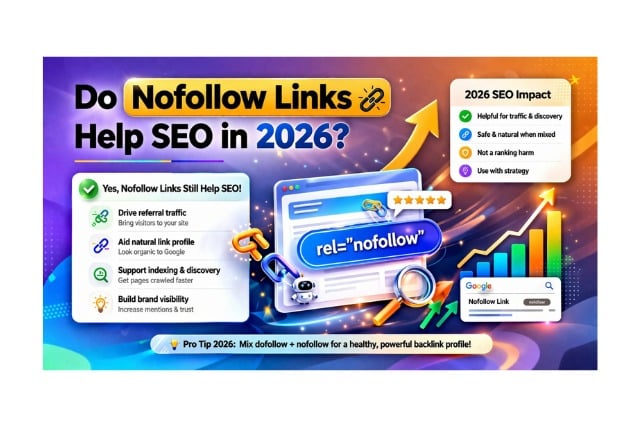
Have you ever wondered, Do Nofollow Links Help SEO in 2026? Many website owners once believed these links had no value. They spent months chasing only dofollow links and ignored everything else. Then something changed.
Some pages with strong nofollow mentions started getting traffic, visibility, and even rankings. That shift made people question everything they thought they knew about SEO.
First, search engine optimization evolves every year. Old tactics fade away. New signals gain importance. Nofollow links once seemed worthless for rankings. Beginners skipped them entirely.
However, search engines grow smarter now. They analyze signals beyond link types. Nofollow links skip direct authority transfer like dofollow links. Still, they contribute in key ways.
Moreover, in 2026, grasp how nofollow links fit your plan. Beginners gain basics. Experts refine tactics. Knowledge builds stronger, natural presence online. Yes, through smart indirect paths.
What Are Nofollow Links? Simple Explanation for Beginners
Nofollow links use a special tag. Webmasters insert rel=”nofollow” in HTML code. The tag instructs search engines clearly. Avoid passing ranking power via this link.
Google launched nofollow back in 2005. The main aim fought comment spam. Blog owners allowed links safely. They blocked free authority leaks. Today, nofollow links fulfill that role. They show up on forums, social platforms, and paid ads. Everyone encounters them daily.
Dofollow vs Nofollow vs Sponsored vs UGC: Key Differences Explained
Next, understanding link types helps create a balanced and effective SEO strategy for long-term growth.
- Dofollow links pass authority and directly support ranking improvements across search engine results pages.
- Nofollow links limit authority flow but still contribute to traffic, visibility, and brand awareness signals.
- Sponsored links identify paid promotions and ensure compliance with search engine advertising guidelines.
- UGC links mark user-generated content, including comments, forums, and community-driven contributions across platforms.
Therefore, combining all link types creates a natural backlink profile that aligns with modern SEO expectations.

No Tech Jargon. Just More Customers.
We aren’t here to hide behind abstract technical metrics to mask a lack of results. Most agencies use complex algorithmic jargon just to confuse you and justify overcharging. JoseOne enjoys literally 100% client retention because, nothing is expensive when it’s worth what you pay for it.
How These Link Attributes Work in HTML
Additionally, HTML attributes help search engines understand the purpose and context behind each link placement. For example, a standard link passes authority unless a specific attribute changes how search engines interpret it.
Moreover, adding rel=”nofollow” signals search engines not to transfer ranking power through that connection.
Thus, choosing the correct attribute ensures clarity and builds trust with search engines over time.
Google’s Official Stance on Nofollow Links in 2026
Google views nofollow as a hint currently. The major Google nofollow update arrived in 2019. Earlier, nofollow forced complete ignorance. Post-update, Google treats it as guidance.
Crawlers may follow links anyway. Context influences some decisions. Rules remain unchanged since then. John Mueller and official docs reinforce this often.
From Strict Directive to “Hint” – The 2019 Update and Current Status
Google declared nofollow a hint for crawling, indexing, and ranking. Sponsored and UGC joined as hints. Search engines grasp link intent better. The change curbs spam. Useful signals persist.
Do Nofollow Links Help SEO in 2026? The Short Answer
Do nofollow links help SEO in 2026? Yes, through indirect channels. They pass no link equity. Direct PageRank stays blocked. Experts confirm real value exists. A 2026 survey reveals 79% of professionals notice effects from nofollow links. Smart use delivers gains.
Direct Impact vs Indirect Benefits – No Link Equity, But Real Value
Direct effects equal zero juice transfer. Indirect advantages stand out strongly. Traffic arrives quickly. Trust builds steadily. Profiles appear genuine.
How Nofollow Links Boost Your SEO Indirectly (Proven Ways in 2026)
Nofollow links direct visitors to your pages. Users click and explore. Engagement rises noticeably. Brands gain authority rapidly. Prominent mentions strengthen trust signals.
E-E-A-T improves over time. Google favors natural backlink profile SEO. All-dofollow setups raise red flags. Add nofollow variety. Profiles turn organic. Engines find fresh content faster. Behavioral cues strengthen. AI tools spot brand references easily.
When Nofollow Links Actually Drive Rankings and Visibility (Real Scenarios & Evidence)
High-authority platforms place nofollow links. Brands receive exposure. Traffic surges follow naturally. Viral social content spreads quickly. Secondary links emerge afterward.
Campaigns deliver measurable results. Sites achieve visibility sans direct juice. Surveys support these outcomes. Experts prize nofollow backlinks highly.
Nofollow vs. Dofollow in 2026: Which Matters More for Long-Term Success?
Dofollow links deliver power directly. They accelerate ranking gains. Nofollow links complete the strategy. Prioritize balance. Dofollow excels in direct boosts. Nofollow excels in trust and visitors.
Building a Natural Backlink Profile – Ideal Ratios and Why Pure Dofollow Looks Suspicious
Target equilibrium always. Excessive dofollow triggers spam alerts. Google detects unnatural patterns. Diverse mixes prevent issues. Sustained success stems from variety.
Common Myths About Nofollow Links Debunked (2026 Edition)
Critics call nofollow links worthless. Reality differs. They generate traffic. Some insist they damage rankings. Evidence lacks support. Others believe dofollow alone counts. Indirect contributions disprove that. Google avoids full ignore. Hints retain contextual weight.
Simple Affordable Rates
At JoseOne, we keep it simple. You don’t need a degree in search engine mechanics—you just need more traffic, more phone calls, and more sales. We offer one, fully-loaded package for just $3 per day, to get your business ranking higher on Google, with a 100% Money-Back Guarantee. We handle the technical heavy lifting so you can focus on running your business.
Best Sources and Strategies to Build High-Quality Nofollow Links in 2026
Social media offers simple nofollow opportunities. Forums and Q&A platforms perform strongly. News features provide authority. Produce excellent content. Links form organically. Apply thoughtful anchor text. Integrate nofollow into dofollow efforts. Emphasize relevance. Quality surpasses volume consistently.
How to Analyze and Check Nofollow Links
Ahrefs displays link categories. SEMrush monitors them effectively. Manual browser checks work well. Extensions accelerate analysis. Studies illustrate success. One site earned massive traffic via nofollow placements. Rankings improved gradually. A key lesson endures: benefits arrive indirectly.
Nofollow Links in the Age of AI Search & Future Trends (2026 Outlook)
AI overviews draw from credible origins. Nofollow mentions aid entity identification. Links convey authority to generative systems. Tomorrow’s strategies blend link types. Comprehensive SEO triumphs.
Frequently Asked Questions
Do nofollow links help SEO in 2026?
Yes, they assist indirectly. They generate traffic, enhance brand exposure, and foster natural backlink profile SEO. Engines sometimes use them as hints for minor ranking influence.
Do nofollow links get ignored by Google completely?
No. Google employs them as signals. They contribute to site understanding and discovery.
Should beginners prioritize nofollow links?
Beginners avoid ignoring them. Balanced nofollow and dofollow appear natural. Trust accumulates over periods.
Can nofollow links deliver traffic?
Yes. High-traffic sources send genuine visitors. Users engage with content deeply.
Do nofollow links raise domain authority?
No direct increase occurs. Indirect perks like visibility spark stronger links later.
Final Verdict
Lastly, nofollow links deserve attention now. They skip direct power transfer. Still, they deliver multiple advantages. They clarify brand to engineers. They attract actual visitors. They craft natural link profiles.
In 2026, SEO focuses on trust, relevance, and presence. Nofollow links fill a subtle yet vital spot. Use them wisely. Your overall strategy strengthens. Do Nofollow Links Help SEO in 2026? Yes – pursue those indirect advantages for lasting growth.