Have you ever wondered why some websites grow fast while others stay stuck even after publishing hundreds of pages? Many people tried different SEO methods in the past, but still failed to scale results.
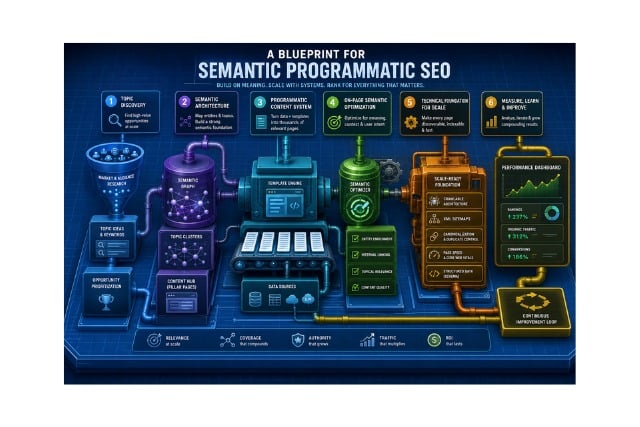
Moreover, a clear system like A Blueprint for Semantic Programmatic SEO helps solve this problem by connecting content, structure, and search intent in a smarter way.
SEO has changed a lot over the years. Simple keyword targeting no longer brings strong results on its own. Search engines now focus on meaning, structure, and relationships between topics. Many website owners struggle because they create random pages without a clear system.
More so, to understand a blueprint for semantic programmatic SEO, you need to think beyond single keywords. This approach builds organized content systems that match user intent at scale. It helps websites grow faster while keeping content useful and structured.
What Is Semantic Programmatic SEO
Semantic programmatic SEO combines two powerful ideas: meaning-based content and automated page creation. Instead of writing isolated pages, you build a structured system of related topics.
Semantic SEO Explained Simply
Semantic SEO focuses on meaning instead of exact keywords. It connects topics, entities, and user intent to help search engines understand context better.
Programmatic SEO Explained Simply
Programmatic SEO uses templates and structured data to create many pages efficiently. It works best when content follows a clear and repeatable pattern.
When both approaches combine, websites scale faster without losing relevance or quality.
Why This Blueprint Matters for Modern SEO
Search engines now understand topics instead of just words. Because of this, websites need structured systems instead of random articles.
This blueprint helps you:
- Build topic authority faster
- Target more search queries without confusion
- Organize content in a logical structure
- Improve ranking stability over time
Businesses use this approach to scale traffic without relying only on manual writing.

No Tech Jargon. Just More Customers.
We aren’t here to hide behind abstract technical metrics to mask a lack of results. Most agencies use complex algorithmic jargon just to confuse you and justify overcharging. JoseOne enjoys literally 100% client retention because, nothing is expensive when it’s worth what you pay for it.
Core Structure of Semantic Programmatic SEO
Topic Clusters and Content Layers
Topic clusters group related pages under one main theme. A pillar page connects all supporting pages and builds authority.
Entity-Based Optimization_ A Blueprint for Semantic Programmatic SEO
Search engines recognize entities like people, places, and concepts. Using these helps Google understand your content context clearly.
Structured Templates for Scaling
Templates help you create pages that follow the same format. This keeps quality consistent while allowing large-scale publishing.
Step-by-Step Blueprint to Build Semantic Programmatic SEO
Start by choosing a strong niche that has multiple subtopics. Break that niche into smaller content groups based on user intent.
Next, create a pillar page that covers the main topic in detail. Then build supporting pages that explain smaller parts of the topic.
After that, design a template for repeating page creation. This step allows you to scale content without losing structure or relevance.
Finally, connect all pages using internal links. This helps search engines understand relationships between your content pieces.
Common Mistakes People Make_ A Blueprint for Semantic Programmatic SEO
Many beginners fail because they treat programmatic SEO as random automation. They create pages without structure or meaning.
Some common mistakes include:
- Creating pages without topic grouping
- Ignoring search intent
- Overloading pages with repetitive content
- Not linking related pages together
Fixing these mistakes improves ranking stability and user experience.
Tools That Help With This Approach
You do not need complex tools to start. Simple SEO tools and data sources can support this system.
You can use keyword research tools to find patterns. Content planning tools help organize topics. Analytics tools show which pages perform well and which need improvement.
How This Blueprint Improves SEO Growth
So, this system improves SEO because it builds structure instead of chaos. Search engines prefer websites that show clear topic authority.
It also helps users find related content easily. When users stay longer, engagement increases, and rankings improve naturally.
Simple Affordable Rates
At JoseOne, we keep it simple. You don’t need a degree in search engine mechanics—you just need more traffic, more phone calls, and more sales. We offer one, fully-loaded package for just $3 per day, to get your business ranking higher on Google, with a 100% Money-Back Guarantee. We handle the technical heavy lifting so you can focus on running your business.
Future of Semantic Programmatic SEO
SEO continues moving toward meaning-based search. Artificial intelligence helps search engines understand content context better than before.
So, websites that use structured systems will stay ahead. Those that rely on random content creation will struggle to compete.
Frequently Asked Questions
What is semantic programmatic SEO?
It is a method that combines meaning-based SEO with scalable page creation using structured systems.
Why is semantic SEO important?
It helps search engines understand content context and improves ranking relevance.
Is programmatic SEO safe for ranking?
Yes, when you create useful, structured, and non-spammy pages that match user intent.
Do I need coding for programmatic SEO?
Basic tools are enough for beginners, but advanced setups may require technical skills.
Can small websites use this strategy?
Yes, even small websites can grow faster using structured content systems.
Conclusion
Lastly, building a blueprint for semantic programmatic SEO gives you a clear system for scaling content and improving rankings. Instead of guessing what to publish next, you follow a structured method that connects topics and improves authority.
Strong SEO success comes from systems, not random effort. When you apply this blueprint correctly, your content becomes easier to manage, scale, and rank. That is why understanding a blueprint for semantic programmatic SEO can completely change how you approach search growth.