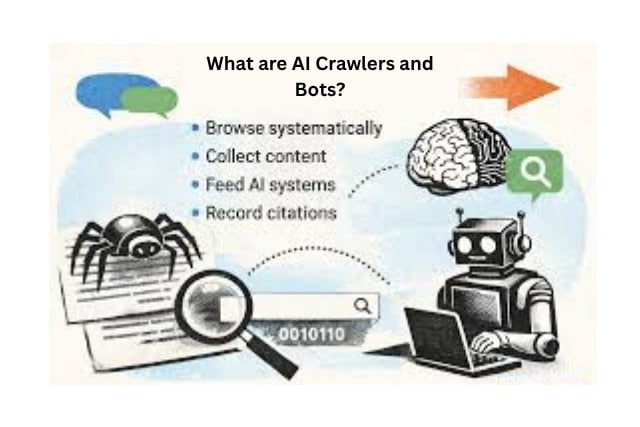
Have you ever noticed strange bots visiting websites and wondered how they actually worked? Many website owners felt confused in the past when AI systems started collecting and understanding online content differently from traditional search engines.
What are AI Crawlers and Bots? became an important question as AI-powered search, chatbots, and smart assistants began using website data to generate answers and recommendations.
More so, it help you understand these digital visitors today. It gives you control over your content and visibility. It increases your chances of AI answers and summaries. So, it protects your work while you grow your online presence.
It delivers key knowledge every website owner needs right now. Also, it shapes the future of search and content discovery.
Artificial intelligence changes the way information moves across the internet every single day. AI crawlers and bots scan websites, analyze content, and help systems understand information faster than before. These tools serve search engines, AI assistants, research platforms, and many digital services around the world.
First, website owners, bloggers, businesses, and SEO professionals gain real advantages from clear knowledge. AI bots affect visibility, content discovery, search performance, and online privacy in important ways. You learn exactly how these crawlers operate and why they matter for your site’s success. Understanding what are AI crawlers and bots gives you the power to make smart decisions about access and protection.
Also, this guide covers definitions, major players, benefits, risks, and practical optimization steps. You discover ways to turn AI website crawling into a valuable opportunity for growth and citations.
Generative AI crawlers need fresh data to train models and create accurate responses for users. You gain exposure when AI-powered search engines cite your pages in helpful answers and summaries.
Moreover, proper management balances open sharing with strong control over your original work and ideas. You build an AI-friendly site that performs well in modern search environments.
A clean structure and semantic SEO improve how AI indexing systems read and connect your content. You create pages that deliver value to both humans and intelligent bots.
Finally, consistent effort positions your website ahead in the age of AI search bots and advanced systems. You monitor activity and adjust strategies based on real data and results.

No Tech Jargon. Just More Customers.
We aren’t here to hide behind abstract technical metrics to mask a lack of results. Most agencies use complex algorithmic jargon just to confuse you and justify overcharging. JoseOne enjoys literally 100% client retention because, nothing is expensive when it’s worth what you pay for it.
Crawlers and Bots in 2026_ What are AI Crawlers and Bots?
OpenAI operates GPTBot, explained as a major crawler for model training purposes. Anthropic runs ClaudeBot to gather high-quality content for its systems. Perplexity uses dedicated AI search bots to deliver cited answers to users every day.
OpenAI GPTBot, Anthropic ClaudeBot, and PerplexityBot Explained
GPTBot explained focuses on broad web data collection for ChatGPT improvements over time. ClaudeBot targets helpful and safe content sources for Anthropic models. PerplexityBot gathers information for real-time research and answer generation in conversations.
How to Identify AI Crawlers and Bots in Server Logs
You check user-agent strings in logs to spot AI website crawling activity patterns. Common names like GPTBot and ClaudeBot appear in request records. Bot traffic analysis tools help separate helpful bots from unwanted ones quickly.
Robots.txt, llms.txt, and Smart Ways to Allow or Block AI Bots
You create clear rules in robots.txt to guide AI web crawlers effectively. You add llms.txt to state preferences for training and citation uses. You decide access levels that match your business goals and needs.
Should You Block AI Crawlers? Risks vs Benefits in 2026
You test different approaches and monitor results over several weeks with care. Many owners allow search bots while limiting pure training crawlers for balance.
Optimizing Your Website for AI Crawlers
You build clean structures with logical internal links and clear headings. You add structured data for AI to help systems understand content faster. You write direct answers and use lists that crawlers extract with ease.
- Use short paragraphs that deliver one idea at a time to readers.
- Add proper schema markup for articles, FAQs, and organization details.
- Include descriptive alt text on images for better multimedia understanding.
- Keep pages fast and mobile-friendly for smooth crawling experiences.
Frequently Asked Questions
What are AI crawlers and bots used for?
AI crawlers and bots are used to scan websites, collect data, understand content, and support AI systems like search engines, chatbots, and virtual assistants.
Are AI crawlers different from search engine bots?
Yes. Traditional search bots mainly index pages for rankings, while AI crawlers also analyze context, meaning, entities, and user intent to support AI-generated answers.
Can websites block AI crawlers?
Yes. Website owners can block or manage AI bots using robots.txt files, server settings, firewalls, and bot management tools.
Do AI crawlers affect SEO?
AI crawlers can influence how websites appear in AI-powered search results, summaries, and recommendations. AI-friendly content and structured websites usually perform better.
How can websites become AI-friendly?
Websites can improve AI visibility by using semantic SEO, structured data, fast page speed, clear headings, internal linking, and helpful content that answers user intent clearly.
Simple Affordable Rates
At JoseOne, we keep it simple. You don’t need a degree in search engine mechanics—you just need more traffic, more phone calls, and more sales. We offer one, fully-loaded package for just $3 per day, to get your business ranking higher on Google, with a 100% Money-Back Guarantee. We handle the technical heavy lifting so you can focus on running your business.
Conclusion
Lastly, what are AI crawlers and bots? It gives you the knowledge to make confident decisions today. It helps you protect your work while you gain visibility in answers.
What are AI Crawlers and Bots? Turn AI website crawling into a real advantage for your site. Apply these insights and build content that AI systems understand and cite.
Start today and create a site ready for the future of search. Your efforts deliver better AI search visibility and stronger brand presence. Take action now and own your space in the world of AI web crawlers and intelligent systems.