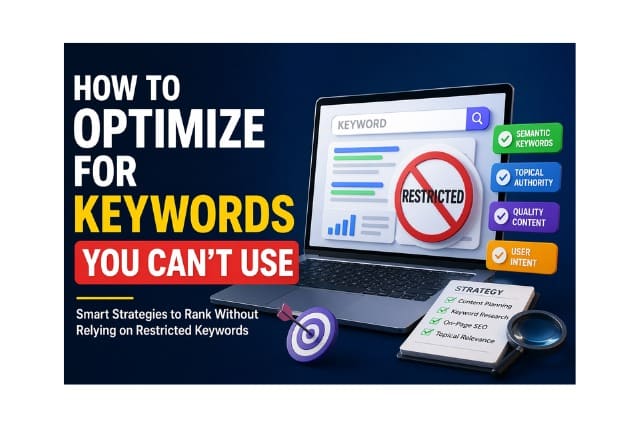
Did you ever struggle while working on how to optimize for keywords you can’t use and feel stuck without a clear direction? Many creators faced ranking problems when they tried to force keywords instead of focusing on meaning and intent.
They tried different SEO tricks but still saw weak results in search engines. A better approach already existed where content ranked through context, structure, and user purpose instead of exact keyword use. So, this method changed how SEO worked and helped pages grow even without restricted keywords.
How to optimize for keywords you can’t use became a major SEO challenge when search engines changed how they ranked content. Writers stopped depending on exact keyword matching and started focusing on intent, meaning, and topic depth.
Search engines improved their systems and began understanding content through context, entities, and user behavior signals.
More so, this shift pushed SEO away from repetition-based writing and toward semantic and intent-based strategies. As a result, creators learned to build strong content that ranks without using restricted or unavailable keywords directly.
What Does “Keywords You Can’t Use” Really Mean and Why They Become Restricted
Some keywords become restricted due to policy rules, legal limits, or brand safety concerns online. Other keywords become hard to use due to competition or platform filtering systems across search engines.
In addition, brands avoid sensitive phrases to protect trust and maintain long-term content safety and credibility standards. Search engines still expect relevance across topics even without exact keyword repetition in content.
They understand meaning through relationships between entities, user behavior, and structured content signals. Writers now use a semantic SEO strategy instead of strict keyword repetition for content creation. They build meaning around topics instead of repeating blocked or limited keyword phrases.
Why Optimizing for Keywords You Can’t Use Matters for SEO Growth and Rankings in 2026
Search engines evolve fast and reward deeper context across all ranking systems today. Google and AI systems now focus on user intent more than keyword density.
Likewise, you gain visibility when you build strong topic depth across your entire content structure. Many websites lose traffic because they depend on exact-match keyword targeting strategies alone.
Smarter sites win through intent-based keyword optimization and broader topical authority development. That approach removes dependence on rigid phrasing and improves ranking stability over time.

No Tech Jargon. Just More Customers.
We aren’t here to hide behind abstract technical metrics to mask a lack of results. Most agencies use complex algorithmic jargon just to confuse you and justify overcharging. JoseOne enjoys literally 100% client retention because, nothing is expensive when it’s worth what you pay for it.
Is “How To Optimize For Keywords You Can’t Use” a High-Demand Topic (Search Trends and User Intent)
Search trends show rising demand for flexible SEO strategies across competitive digital markets today. Many creators struggle with ranking limits and content restrictions across different search platforms.
So, users search for safer ways to rank content without triggering policy or ranking issues. They want stable traffic strategies that survive algorithm updates and search system changes.
Search intent optimization drives this demand because users want clear and actionable guidance. They prefer step-based solutions instead of theory-heavy explanations or unclear SEO advice.
How Search Engines Rank Content Without Exact Keywords Using Semantic SEO and Intent Signals
Search engines no longer rely on exact keyword repetition for ranking decisions across systems. They now apply a semantic SEO strategy to understand the meaning across full content structures.
Furthermore, user behavior signals like clicks, engagement, and dwell time help measure content quality. Longer engagement often signals stronger relevance for modern search ranking systems.
Entity-based SEO connects ideas, topics, and people across structured knowledge systems.
- Entities link topics across pages and content clusters
- Entities strengthen topical authority signals in search engines
- Entities improve AI understanding of content meaning
Content relevance strategy now defines ranking success across competitive industries and niches. You must align content with user goals instead of matching exact keyword phrases.
Step One: Identify and Confirm Restricted Keywords with Data Analysis and Competitive Research
Start with alternative keyword research before writing any SEO-focused content strategy. Study competitors and identify which terms they avoid or replace in content.
Similarly, use SEO tools to find gaps between top-ranking pages and weak content. Compare structure, headings, and topic coverage across different ranking results carefully.
Search patterns reveal hidden opportunities for safe and strong ranking paths. You can map user intent without using restricted keyword phrases directly. Always confirm keyword limits before writing content to avoid wasted effort later.
Core Strategy: Build Context and Relevance Without Using Restricted Keywords Directly
You must build meaning through supporting ideas instead of direct keyword repetition. Focus on long-tail keyword variations to strengthen topical relevance naturally and safely.
Besides, add supporting subtopics that explain causes, effects, and related outcomes clearly. Contextual SEO techniques connect all ideas into one structured content framework.
Write clear sentences that focus on one idea per line consistently. That approach improves readability and strengthens SEO performance at the same time.
On-Page SEO Techniques That Work When You Cannot Use Target Keywords
On-page SEO still plays a major role in modern ranking success today. You must shift focus from keyword density to content structure quality improvement.
More so, use headings that explain intent clearly without repeating exact keyword phrases. Include natural variations inside titles, meta tags, and internal linking systems.
AI search optimization now rewards structured formatting over keyword stuffing methods. Search engines scan hierarchy and context more than repetition patterns today.
- Use clear headings that match search intent
- Use internal links that connect related topics
- Use structured content blocks for clarity
Advanced SEO Techniques Using Entity SEO AI Optimization and Multi-Layered Strategies
Entity-based SEO builds strong connections between topics across search systems today. AI search optimization uses entity mapping to understand content meaning deeply.
Multi-layered SEO includes topic clusters and internal linking systems together. These structures build authority and improve long-term ranking stability.
Intent-based keyword optimization guides content direction toward real user problems. That strategy improves relevance without relying on exact keyword usage. Combine all layers to create strong topical authority across your niche.
Tools, Data Sources, and Resources to Find Alternative Keywords and Track Performance
SEO tools help you discover alternative keyword research opportunities quickly today. They reveal variations in users actually search across different platforms and devices.
Therefore, track engagement metrics like clicks, time on page, and bounce rates carefully. These signals show how users interact with your content quality directly.
Content relevance strategy depends on feedback loops and performance adjustments over time. Continuous updates help maintain ranking strength and search visibility consistently.
Real Examples and Case Studies of Ranking Without Using Restricted Keywords
Many websites rank without using exact target keywords in their content today. They focus on depth, clarity, and strong topic coverage instead of repetition.
Tech blogs often avoid strict product phrases yet still rank highly. They use guides, comparisons, and explanations to build authority and trust.
- Guides replace keyword-repetition strategies
- FAQs expand topic coverage naturally
- Comparisons strengthen authority signals clearly
These examples prove that meaning matters more than exact wording in SEO. Search engines reward clarity, structure, and relevance over repetition strategies today.
Common Mistakes, Legal Risks, and Compliance Issues to Avoid in Restricted Keyword SEO
Many creators still force keywords into content unnaturally and lose rankings. Search engines detect this pattern and reduce visibility across results quickly.
Thus, some websites ignore platform rules and face content removal risks later. That creates long-term damage to SEO performance and trust signals.
Avoid over-optimization because modern algorithms detect unnatural repetition patterns easily today. Focus on contextual SEO techniques for safer and stronger performance results.
Measuring Success, Tracking Rankings and Traffic, and Preparing for Future SEO Trends
You must track engagement metrics instead of only ranking positions today. Traffic behavior shows how users interact with your content quality overall.
AI systems now evaluate topic depth across entire content networks globally. A strong relevance strategy performs better than keyword-heavy pages in modern SEO.
Prepare for SEO changes by focusing on meaning, structure, and intent. Avoid dependence on exact keyword repetition for long-term SEO success.
How To Optimize For Keywords You Can’t Use in Measuring Success and Long-Term Growth
You measure success by topic strength and user response across content systems. You do not depend on keyword repetition anymore for SEO performance tracking.
Simple Affordable Rates
At JoseOne, we keep it simple. You don’t need a degree in search engine mechanics—you just need more traffic, more phone calls, and more sales. We offer one, fully-loaded package for just $3 per day, to get your business ranking higher on Google, with a 100% Money-Back Guarantee. We handle the technical heavy lifting so you can focus on running your business.
Frequently Asked Questions
What does “How To Optimize For Keywords You Can’t Use” mean in SEO?
It means building content that ranks without using restricted or unavailable keywords through meaning and context.
Why do some keywords become unusable in content strategy?
Some keywords become restricted due to policy rules, competition limits, or brand safety requirements across platforms.
Can content rank without exact keyword usage?
Yes, content can rank through semantic SEO, intent signals, and strong topic relevance instead of exact phrases.
What strategies replace restricted keywords in SEO writing?
Writers use entity-based SEO, long-tail variations, and contextual optimization to replace direct keyword usage.
How do search engines understand content without exact keywords?
Search engines use semantic analysis, user behavior data, and topic relationships to understand content meaning.
Final Thoughts
Lastly, SEO success no longer depends on repeating exact keywords in today’s search systems. Instead, modern ranking depends on intent, structure, and clear meaning across every piece of content. How to optimize for keywords you can’t use showed that writers can still achieve strong visibility without using restricted or exact phrases.
Search engines now reward clarity, context, and deep topic coverage over outdated keyword-heavy writing styles.
Over time, creators who focus on understanding what users want will have higher and more stable rankings. So, this change makes it easier for SEO to grow over time, get steady traffic, and keep its search performance strong.