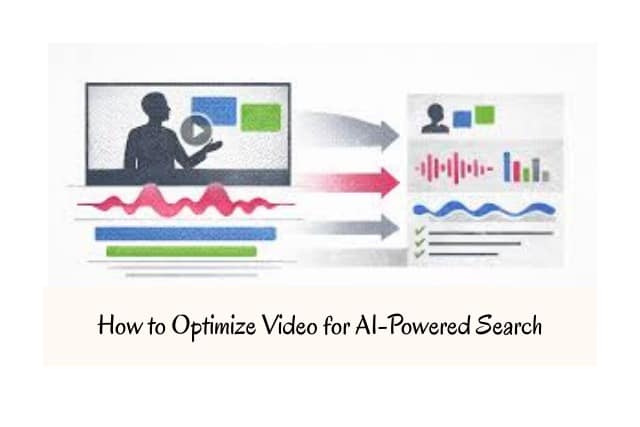
How to Optimize Video for AI-Powered Search shows how videos can reach more viewers using AI, LLMs, and search optimization. Proper video SEO helps content get discovered, recommended, and ranked in AI-driven results.
Video has become a dominant way for people consume content online now. AI-powered search analyzes video content, transcripts, thumbnails, and engagement to decide which videos appear in results.
How to Optimize Video for AI-Powered Search guides beginners and experts on practical strategies. It covers metadata, captions, structured data, engagement optimization, and AI tools.
Creators increase video reach, improve engagement, and stay ahead in AI-driven search. Businesses apply these tips to grow their audience fast.
Moreover, the guide explains the shift from traditional views to AI citations. Readers learn why transcripts and schema matter most. They discover steps to make videos AI-friendly today.
AI-Powered Search and Video Visibility Basics
What AI-Powered Search Means for Videos in 2026
AI search pulls video clips into direct answers quickly. Users ask questions and receive relevant highlights fast. Brands earn mentions instead of just clicks.
How LLMs, Google Video Overviews, and YouTube AI Interpret Video
Large models read transcripts and identify key moments accurately. Google displays video summaries in search results pages. YouTube AI recommends related clips to active users.
Traditional Video SEO vs AI Video Optimization: Key Differences
Old SEO targets views on platforms like YouTube alone. AI video optimization seeks citations in model replies. Focus moves to AI-powered video discovery now.
Why Video Optimization Matters: Zero-Click, Voice, and Multimodal Trends
Zero-click answers keep users on search pages often. Voice queries demand quick video facts. Multimodal combines text and visuals for complete understanding.
Core Factors That Drive Video Visibility in AI Search
Metadata Mastery: Titles, Descriptions, Tags, and AI-Friendly Keywords
Creators craft titles that match user questions directly. They add descriptions with key terms and details. Tags create topic links for better search matches.

No Tech Jargon. Just More Customers.
We aren’t here to hide behind abstract technical metrics to mask a lack of results. Most agencies use complex algorithmic jargon just to confuse you and justify overcharging. JoseOne enjoys literally 100% client retention because, nothing is expensive when it’s worth what you pay for it.
Transcripts, Captions, and Subtitles: The Foundation of AI Understanding
Video transcripts and captions allow models to read content fully. They improve accuracy when AI pulls clips. Creators include them to gain a stronger reach.
Thumbnails, Hooks, Watch Time, and Engagement Signals
Video thumbnails optimization attracts clicks with clear, strong images. Creators start videos with powerful hooks. High watch time signals value to algorithms.
Video Length, Retention, Chapters, and Playlists for Better Parsing
Creators keep videos concise to maintain user focus. Retention proves content holds attention well. Chapters let AI jump to important sections.
12 Proven Tactics to Optimize Videos for AI Search
Tactic 1–4: Descriptive Titles + Thumbnails + Schema + Timestamped Chapters
Creators pick titles that answer common user queries. They design thumbnails for instant visual appeal. They add structured data for videos to mark clips. They create chapters for simple navigation.
Tactic 5–8: Accurate Transcripts + Surrounding Text + Conversational Queries + Visual Clarity
Creators generate precise transcripts for model scans. They surround embeds with rich descriptive text. They target conversational queries in video scripts. They ensure visuals remain sharp and clear.
Tactic 9–12: Backlinks + Multi-Platform Syndication + AI Trend Tools + Crawler Access
Creators earn backlinks from trusted authority sites. They widely share videos across multiple platforms. They use AI tools to spot current trends. They allow crawlers complete video access.
- Add schema markup to every video page.
- Generate fully accurate transcripts for each clip.
- Design thumbnails that match video content.
- Include chapters with clear descriptive labels.
Technical SEO Setup for AI-Optimized Videos
Video Hosting: YouTube vs Self-Hosted vs Vimeo—What Works Best
YouTube provides built-in AI features for discovery. Self-hosted hosting gives full control over data. Vimeo suits professional needs with clean embeds.
Implementing VideoObject Schema, Rich Results, and Thumbnail Snippets
Creators add the VideoObject schema to video pages. It triggers rich results in search listings. Snippet thumbnails draw more attention to content.
Embedding Videos Without Speed Penalties and Mobile Optimization
Creators embed videos with lazy load settings. They optimize files for fast mobile playback. They test on devices for smooth performance.
Ensuring Crawlability: Robots.txt, Sitemaps, and AI Crawler Access
Creators update robots.txt to allow AI bots. They include videos in site maps. They grant full access for complete indexing.
Content Strategy and Semantic Optimization for Videos
Creators plan videos around buyer journey stages. They match long-tail queries for niche success. They use voice search video SEO for spoken phrases.
Moreover, creators show expertise in scripts and visuals. They cite reliable sources for trust. They refresh videos to match current trends.
In addition, creators fight content drift with regular updates. They add new facts to older clips. They keep relevance high for AI models.
Furthermore, creators mix video with text and images. Audio cues strengthen multimodal appeal. Models prefer complete content packages.
Tools, AI Assistance, and Workflow Integration_ How to Optimize Video for AI-Powered Search
Creators pick tools for automatic transcripts and summaries. Tools save time on editing work. Creators spot gaps with AI analysis.
Moreover, creators use generative AI for video content ideas. It helps craft scripts quickly. Creators keep a human touch for quality control.
In addition, creators link videos to knowledge graphs. Entities connect their work. Creators boost finds in AI searches.
Furthermore, creators start with one video test project. They add schema and transcripts first. They track changes in visibility closely.
Simple Affordable Rates
At JoseOne, we keep it simple. You don’t need a degree in search engine mechanics—you just need more traffic, more phone calls, and more sales. We offer one, fully-loaded package for just $3 per day, to get your business ranking higher on Google, with a 100% Money-Back Guarantee. We handle the technical heavy lifting so you can focus on running your business.
Measuring and Tracking Video Performance in AI Search
Creators look at video engagement metrics like watch time. Metrics show real user interest levels. Creators track clicks from AI features.
Moreover, creators monitor citations in model answers daily. Tools count mentions across platforms. Creators see influence beyond simple views.
In addition, creators use data to tweak thumbnails. They refine scripts based on retention drops. They plan future videos more smartly.
Furthermore, creators avoid common measurement errors. They ignore vanity stats like raw views. They focus on conversions instead.
Common Mistakes, Risks, and Best Practices
Creators skip captions and lose AI reads completely. They fix it with full transcripts always. Models need text to pull clips.
Moreover, creators stuff keywords and hurt the natural flow. They write natural scripts instead. They keep focus on the viewer’s needs. Creators forget the schema and miss rich spots. They add it to every video page. They gain an edge in results.
Furthermore, creators ignore performance tracks and guess blindly. They set up analytics early. They adjust based on facts.
Frequently Asked Questions
How does AI-powered search understand video content?
AI analyzes video titles, descriptions, transcripts, visuals, and user engagement to understand relevance and intent.
Why do video transcripts matter for AI search visibility?
Transcripts help AI read spoken content easily. They improve indexing, context understanding, and citation chances.
Which video elements improve AI search optimization?
Clear titles, accurate descriptions, structured data, captions, thumbnails, and strong engagement signals improve visibility.
How does video help appear in AI-generated answers?
AI prefers videos that explain topics clearly. Helpful videos are often summarized or cited in AI answers.
Which platforms support AI-powered video search the most?
YouTube, Google Search, and AI assistants prioritize optimized video content with clear metadata.
Conclusion
To sum up, how to optimize video for AI-powered search focuses on clarity, relevance, and trust. AI systems reward videos that answer questions clearly and provide real value.
By optimizing titles, transcripts, structure, and engagement, brands increase visibility across AI-driven platforms. Video optimization is no longer optional. It is a key part of future search success.