Why does The Complete Guide to Topic Clusters and Pillar Pages for SEO matter for building long-term search visibility and authority today?
Moreover, it explains key shifts in search. Modern engines understand topics, not just keywords. Topic clusters group related content around one pillar page. So, this setup strengthens internal links and topical authority. It matches user search intent better.
So, businesses and bloggers adopt this method fast. They see stable ranking growth. Learning it builds scalable SEO plans. The Complete Guide to Topic Clusters and Pillar Pages for SEO starts simple. Everyone gains clear steps.
What Are Topic Clusters in SEO?
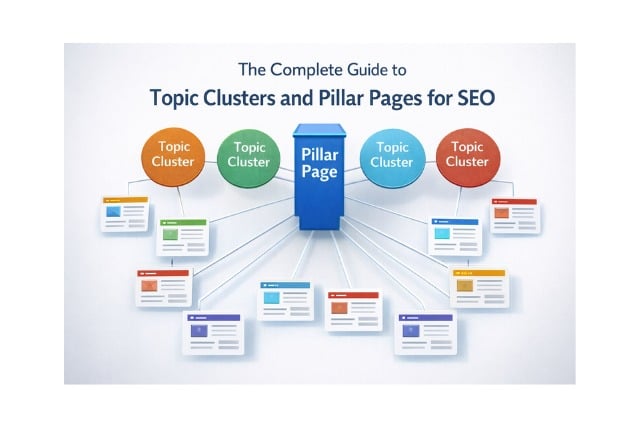
Furthermore, teams build groups of connected pages. One central page guides the rest. Supporting pages cover specific angles. Strong links hold the group together. Search engines recognize full topic coverage. Users find complete answers in one place. Clusters replace old single-page tactics. Isolated pages compete against each other.
In addition, clusters unite them for strength. Google processes context and meaning now. Clusters align perfectly with that change. Sites dominate broad themes. Rankings expand across many terms. Topic-based SEO delivers lasting results. Visitors spend more time exploring.
Definition of Topic Clusters_ You Need to Know
Topic clusters connect multiple pages around one core theme. Internal links tie them into a strong unit.
How Topic Clusters Organize Content_ The Complete Guide to Topic Clusters and Pillar Pages for SEO
The central page provides a wide overview. Supporting pages explore narrow subtopics in detail.
Difference Between Keywords and Topics
Keywords focus on exact search phrases. Topics include related ideas and user questions.

No Tech Jargon. Just More Customers.
We aren’t here to hide behind abstract technical metrics to mask a lack of results. Most agencies use complex algorithmic jargon just to confuse you and justify overcharging. JoseOne enjoys literally 100% client retention because, nothing is expensive when it’s worth what you pay for it.
What Is a Pillar Page and Its Role in Content Strategy?
Next, a pillar page tackles one major subject deeply. It serves as the group’s main hub. Writers include essential facts and overviews. Links guide readers to related details. New visitors often land here first. The page establishes trust quickly.
Teams treat it as the foundation. All other content builds from it. Pillar page SEO raises the entire site’s performance. Teams updates it regularly. They add clear headings and lists. The content hub model begins here.
Definition of a Pillar Page
A pillar page delivers a comprehensive overview of a broad topic. It contains substantial length and detail.
Types of Pillar Pages
Guide pages teach foundational concepts. Definitional pages clarify key terms. How-to pages provide practical steps.
Role of Pillar Pages in Content Strategy
Pillar pages attract initial traffic. They direct users toward deeper content. Strategies revolve around them.
How Topic Clusters and Pillar Pages Work Together_ The Complete Guide to Topic Clusters and Pillar Pages for SEO
Additionally, pillar pages occupy the center position. Cluster pages extend outward from them. Links travel in both directions. Pillar pages push visitors toward clusters. Cluster pages return visitors to the pillar. The network gains strength over time. Search engines crawl the structure easily. Users navigate without confusion.
Furthermore, the entire site earns more authority. Semantic SEO strategy works best here. Clear connections emerge naturally. Teams add fresh pages gradually. Links remain current and relevant. Everyone notices consistent improvements.
Why Topic Clusters and Pillar Pages Matter in Modern SEO: Benefits and Google Preferences
Google prioritizes complete topic coverage. Clusters provide exactly that coverage. Pillar pages launch the user journey. Visitors receive thorough, helpful information. Websites secure higher positions steadily. Organic traffic increases over months. Google favors sites with proven depth.
Moreover, clusters demonstrate real expertise. Topical authority SEO develops rapidly. Search engines rely on entities today. Clusters support accurate user goals. Search intent optimization becomes simpler. Content prioritizes human needs first. Engines recognize and reward quality.
Improved Search Visibility
Clusters address numerous related search terms. Websites appear in diverse result sets.
Better Internal Linking
Links distribute authority across connected pages. Visitors remain engaged within the site.
Stronger Topical Authority
Focused depth on single themes earns Google’s trust.
Topic Clusters vs. Traditional Keyword-Focused SEO and Content Silos
Traditional SEO targeted one keyword per page. Pages often competed internally. Clusters combine related ideas wisely. Internal competition disappears completely. Content silos restrict strict categories. Links flow in only one direction. Clusters permit open, two-way linking.
Furthermore, reciprocal links create greater power. Older methods ignore the broader context. Clusters incorporate rich semantic meaning. SEO content architecture evolves significantly. Adaptable structures outperform rigid ones.
Step-by-Step Process to Build Topic Clusters and Pillar Pages
Select a strong core theme first. Research supporting search terms next. Identify current content gaps carefully. Draft the full pillar page. Include an organized structure throughout. Develop individual cluster pages afterward. Connect everything with reciprocal links.
Next, review on-page SEO elements. Launch the complete group together. Monitor performance data closely. Refresh content at regular intervals. Internal linking structure remains essential. Teams achieve reliable success.
How to Choose the Right Pillar Topic and Perform Keyword Research
Choose themes that match business goals. Verify high search volume exists. Seek topics with manageable competition. Tools reveal accurate data insights. Discover valuable long-tail variations.
Additionally, maintain a balance between information and sales. Strong themes address user problems directly. Research uncovers genuine audience needs. Group similar terms by clear intent.
Search Intent Alignment
Themes must answer actual user questions. They resolve specific pain points effectively.
Keyword Breadth and Depth
Main terms cover the topic widely. Supporting terms add necessary depth.
Commercial and Informational Balance
Educational pieces mix with conversion-focused content. Users follow natural buying paths.
Internal Linking Strategy and On-Page Optimization for Clusters
Insert links in logical text positions. Select descriptive anchor phrases carefully. Vary anchor text across pages. Cluster pages link frequently to pillars. Pillar pages highlight cluster sections clearly. Include organized tables of contents.
Moreover, ensure fast page loading speeds. Apply a strong heading hierarchy. Incorporate relevant supporting images. Craft compelling title tags. Write persuasive meta descriptions. Content clustering for SEO connects everything.
How to Link Cluster Pages to the Pillar
Place links where context supports them. Highlight obvious topic relationships.
How the Pillar Links Back to Clusters
Build dedicated overview sections. Present subtopic lists cleanly.
Best Anchor Text Practices
Choose accurate, concise phrases. Maintain natural readability always.
Common Mistakes to Avoid, Measuring Performance, and Recommended Tools
Teams often neglect thorough research. Content becomes shallow and weak. Links overlook important connections. Pages remain isolated and forgotten. Teams ignore regular content updates. Outdated information damages credibility.
Furthermore, monitor organic traffic trends closely. Observe keyword ranking movements. Measure average time on page. Google tools provide free insights. Ahrefs identifies content gaps. SEMrush supports cluster planning. Tools accelerate the entire process. Teams correct issues quickly.
Simple Affordable Rates
At JoseOne, we keep it simple. You don’t need a degree in search engine mechanics—you just need more traffic, more phone calls, and more sales. We offer one, fully-loaded package for just $3 per day, to get your business ranking higher on Google, with a 100% Money-Back Guarantee. We handle the technical heavy lifting so you can focus on running your business.
Real-World Examples, Site-Specific Applications, and Updating Strategies
HubSpot expanded its inbound marketing hub. Traffic increased dramatically over time. Salesforce dominates CRM-related searches. Blogs organize posts into clusters easily. SaaS companies group feature explanations.
Next, E-commerce sites connect product guides. Local businesses cluster service pages. Teams refresh content every quarter. They introduce new supporting clusters. Pillar pages receive fact updates. Teams monitor industry trends closely. Successful examples inspire clear action.
Future of Topic Clusters and Pillar Pages in the AI Search Era
AI transforms search processing rules. Clusters align with entity recognition. Pillar pages maintain central knowledge. Zero-click answers increase steadily.
Clusters encourage direct site visits. Personalized experiences expand rapidly. Strategies adjust to new signals. Comprehensive depth retains top value. It holds ongoing relevance. Teams apply its principles daily. It drives measurable success. AI systems prefer organized hubs.
Finally, The Complete Guide to Topic Clusters and Pillar Pages for SEO prepares sites well. Teams stay competitive now. It delivers lasting advantage. Depth-focused approaches dominate trends. It equips everyone.
Frequently Asked Questions
What are topic clusters in SEO?
Topic clusters group related content around a central pillar page. They build topical authority through strong internal links.
What is a pillar page?
A pillar page provides an in-depth overview of a broad topic. It links to detailed supporting cluster content.
How do topic clusters improve search rankings?
Topic clusters enhance internal linking and topical depth. Search engines evaluate and reward comprehensive coverage.
Who should use topic clusters and pillar pages?
Bloggers, businesses, and content sites gain benefits. The strategy suits informational and commercial goals.
How long does it take to see SEO results?
Competition and quality influence timelines. Most sites experience gradual improvements over months.
Conclusion
Lastly, the Complete Guide to Topic Clusters and Pillar Pages for SEO reveals why organized content wins today. Topic-focused structures help engines and users grasp information better.
So, this method boosts rankings, engagement, and sustainable growth. Sites that embrace clusters establish lasting authority and protect future performance.