
SEO Keyword Ranking Report| How to Track and Boost Rankings
Are your SEO efforts working? So, if you’re not tracking keyword rankings, you’re flying blind. An SEO keyword ranking report gives you the insights needed to stay ahead in search results—and your competition.
Therefore, tracking keyword performance is the backbone of any SEO strategy. Whether you’re managing a personal blog or running a full-scale digital marketing campaign, knowing where your keywords stand on search engines is critical.
An SEO Keyword Ranking Report tells you how well your keywords are ranking, which pages are winning or losing visibility, and what actions you need to take next.
That’s why! this guide breaks down everything you need to know about keyword ranking reports—from what they include to how to create and use them effectively.
Why Keyword Ranking Reports Matter
Keyword ranking reports are the cornerstone of SEO, showing how your website ranks in search engine results pages (SERPs) for targeted keywords. They track progress, reveal opportunities, and pinpoint areas for improvement.
Whether you’re a blogger, e-commerce owner, or agency professional, these reports provide data-driven insights to boost visibility on Google and beyond.
What Is an SEO Keyword Ranking Report?
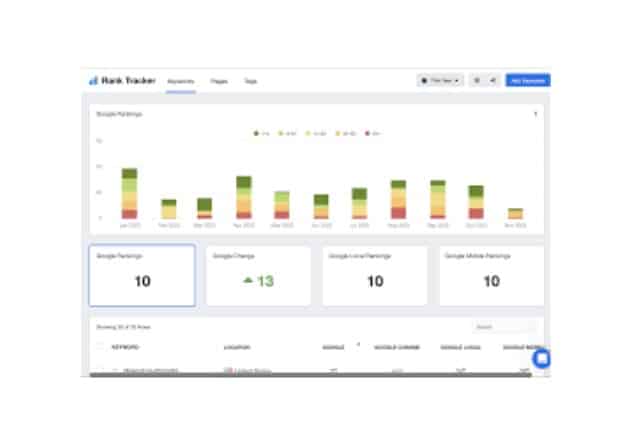
An SEO keyword ranking report is a document or dashboard detailing your web pages’ positions in SERPs for specific keywords. It helps you:
- Track keyword performance over time
- Identify high-potential SEO opportunities
- Monitor competitor rankings
- Assess SEO campaign effectiveness
- Adapt to search engine algorithm updates
Why You Need a Keyword Ranking Report in Your SEO Strategy
Without ranking reports, you’re optimizing blindly. Benefits include:
- Measuring SEO return on investment (ROI)
- Identifying underperforming pages or content
- Prioritizing high-traffic-potential keywords
- Comparing mobile vs. desktop or local vs. global rankings
- Detecting shifts from algorithm updates (e.g., Google’s 2025 core-updates)
[Expert Insight]: Rankings vary due to personalized search, location, and device differences. Modern SEO prioritizes topic and user intent over exact positions. Pair ranking reports with click-through rates (CTR), conversions, and engagement metrics for a complete view.
What Metrics Are Included in a Keyword Authority d Ranking Report?
A robust report includes:
- Keyword Position: Current rank on Google or other search engines
- Search Volume: Estimated monthly searches
- Keyword Difficulty (KD): Score (0–100) showing ranking competitiveness
- Traffic Potential: Estimated organic traffic for top positions
- SERP Features: Presence in featured snippets, map packs, or “People Also Ask”
- Ranking Changes: Gains or losses since the last report.
- Device & Location Breakdowns: Rankings by mobile/desktop or region
- Competitor Rankings: Competitors’ positions for the same keywords
Tools to Generate Keyword Ranking Reports
Choose tools based on your needs and budget:
[Beginner Tip]: Start with Google Search Console for free, reliable Google data.
- SEMrush: Tracks historical data, SERP features, and competitors. Best for agencies needing robust reporting. Limitation: Higher cost ($129–$499/month as of 2025).
- Ahrefs: Excels in keyword tracking, backlink analysis, and competitor insights. Ideal for deep research. Limitation: No real-time rank tracking.
- Google Search Console (GSC): Free, showing real Google impressions and clicks. Limitation: Lacks competitor data and historical trends.
- Rank Math SEO (WordPress): Integrates ranking trends into WordPress. Great for bloggers. Limitation: Limited to WordPress sites.
- AccuRanker, SERPWatcher, SE Ranking: Specialized rank trackers for freelancers and small agencies. Limitation: Fewer features than SEMrush/Ahrefs.
- Comparison Tip: SEMrush offers superior client-ready visualizations; Ahrefs is better for keyword research depth; GSC is ideal for verifying Google data.
How to Create a Keyword Ranking Report Step-by-Step
- Select Keywords: Balance high-volume (e.g., “vegan recipes”) and long-tail keywords (e.g., “vegan protein smoothie recipes”).
- Choose a Tool: Pick SEMrush, Ahrefs, or GSC based on budget and goals.
- Set Tracking Frequency: Daily for volatile niches (e.g., news), weekly for active campaigns, or monthly for long-term tracking.
- Filter by Location/Device: Use geo-specific (e.g., “coffee shop NYC”) or device-based filters for precision.
- Track SERP Features: Note appearances in featured snippets, map packs, or knowledge panels.
- Export & Share: Generate reports in CSV, PDF, or Google Data Studio for clients or teams.
How to Analyze a Keyword Ranking Report (With Example)
Make data actionable:
- Find Quick Wins: Keywords in positions 5–20 can reach page 1 with optimization.
- Spot Declines: Drops may indicate technical issues (e.g., broken links), outdated content, or competitor gains.
- Check for Cannibalization: Multiple pages ranking for the same keyword can dilute performance.
- Identify Seasonal Trends: Plan for keywords peaking
seasonally (e.g., “Christmas gifts” in Q4).
- Monitor Algorithm Impact: Sudden drops may tie to Google’s core updates—monitor X or SEO blogs for 2025 update insights.
- Uncover Competitor Opportunities: Use SEMrush’s “Keyword Gap” tool to find keywords competitors rank for but don’t. Example: A competitor ranks for “vegan dinner recipes” (position 5, 10,000 searches/month). Create a detailed recipe post with schema markup to compete.
Case Study_ Vegan Recipe Blog
Keyword Position Search Volume KD Traffic Potential Change SERP Features
vegan protein recipes 7 12,000 45 1,200 +5 None
vegan breakfast ideas 15 8,000 38 800 -2 People Also Ask
plant-based meal prep 3 5,000 50 1,500 0 Featured Snippet
Analysis: “Vegan protein recipes” jumped from 12 to 7 after adding 500 words of content, optimizing the meta title, and securing two high-authority backlinks.
Action: Add internal links from a popular “vegan desserts” page and include recipe schema to target position 3. “Vegan breakfast ideas” dropped due to a competitor’s new, video-heavy post.
Action: Add a video recipe and optimize for “People Also Ask” questions. “Plant-based meal prep” holds steady in a featured snippet—monitor for stability.
Visualization: Ranking Trends
Below is a Chart.js line graph showing ranking trends over four weeks:
{
“type”: “line”,
“data”: {
“labels”: [“Week 1”, “Week 2”, “Week 3”, “Week 4”],
“datasets”: [
{
“label”: “Vegan Protein Recipes”,
“data”: [12, 10, 8, 7],
“borderColor”: “#4CAF50”,
“backgroundColor”: “rgba(76, 175, 80, 0.2)”,
“fill”: true
},
{
“label”: “Vegan Breakfast Ideas”,
“data”: [13, 13, 14, 15],
“borderColor”: “#F44336”,
“backgroundColor”: “rgba(244, 67, 54, 0.2)”,
“fill”: true
},
{
“label”: “Plant-Based Meal Prep”,
“data”: [3, 3, 3, 3],
“borderColor”: “#2196F3”,
“backgroundColor”: “rgba(33, 150, 243, 0.2)”,
“fill”: true
}
]
},
“options”: {
“responsive”: true,
“scales”: {
“y”: {
“reverse”: true,
“title”: {
“display”: true,
“text”: “SERP Position”
},
“min”: 1,
“max”: 20
},
“x”: {
“title”: {
“display”: true,
“text”: “Time”
}
}
},
“plugins”: {
“title”: {
“display”: true,
“text”: “Keyword Ranking Trends Over 4 Weeks”
}
}
}
}
Chart Explanation: The graph shows “vegan protein recipes” improving, “vegan breakfast ideas” declining, and “plant-based meal prep” stable. The reversed y-axis reflects better rankings (lower numbers) at the top.
How Often Should You Review Keyword Rankings?
- Daily: For large sites or volatile industries (e.g., news, finance).
- Weekly: For active SEO campaigns or competitive niches.
- Monthly: Standard for most businesses or client reporting.
- Quarterly: For long-term strategy in stable industries.
Common Mistakes to Avoid
Focusing only on rankings, ignoring CTR or conversions.
Overlooking mobile/local ranking differences is critical for location-based businesses.
Not updating keyword lists as search trends or user intent evolve.
Ignoring branded vs. non-branded keywords, which skew metrics.
Neglecting SERP feature optimization (e.g., for featured snippets).
How to Share and Present Ranking Reports
Make reports clear and impactful:
Use visualizations (e.g., line graphs for trends, and pie charts for device splits).
Highlight key wins/losses with causes (e.g., “Rank drop due to competitor’s new content”).
Suggest next steps (e.g., “Optimize meta titles for positions 5–10”).
Use Google Data Studio for interactive, real-time dashboards.
Tailor to audiences: technical details for SEO teams, and high-level insights for executives.
Expert Tips to Improve Rankings Based on Report Insights
Optimize for Quick Wins: Update pages in positions 5–20 with better content, meta tags, or schema markup.
Build Internal Links: Link from high-authority pages to boost weaker ones.
Target Long-Tail Keywords: Strengthen topical authority (e.g., “vegan protein smoothie” alongside “vegan protein recipes”).
Leverage Schema Markup: Increase rich snippet or knowledge panel visibility.
Monitor Algorithm Updates: Check X for real-time SEO insights on Google’s 2025 updates.
Use AI Tools: Tools like SurferSEO analyze top-ranking pages to suggest content improvements (e.g., ideal word count, keyword density).
Responding to Google’s E-A-T: Google’s Expertise, Authoritativeness, and Trustworthiness (E-A-T) guidelines heavily influence rankings, especially post-2025 updates. For “vegan protein recipes,” add author bios with credentials (e.g., certified nutritionist), cite reputable sources (e.g., PubMed studies), and secure backlinks from trusted sites like health blogs.
Emerging Trends in Keyword Ranking
AI-Driven SEO: Tools like SurferSEO or Clearscope use AI to recommend content optimizations based on top-ranking pages, integrating seamlessly with ranking reports.
Topic Clusters: Build authority around topics (e.g., “vegan nutrition”) rather than single keywords to align with Google’s semantic search.
Voice Search Optimization: Track conversational long-tail keywords (e.g., “What are vegan protein recipes”) for Siri or Alexa.
Zero-Click Searches: Optimize for featured snippets or “People Also Ask” to capture traffic despite declining click-throughs.
At Last Words
A keyword ranking report is your roadmap to SEO success. Track trends, spot gaps, and act on insights to turn rankings into results.
An SEO keyword ranking report is more than a data snapshot—it’s a strategic tool. It helps you track progress, identify opportunities, and respond to drops in visibility before they hurt your traffic.
Whether you’re an SEO beginner or a seasoned marketer, regularly reviewing your keyword rankings is essential for long-term success. Start building your report today and take control of your search performance.
Start your first report today with GSC or a paid tool—and watch your Google rankings soar!
Frequently Asked Questions
How accurate are keyword rankings?
Premium tools like SEMrush and Ahrefs are highly accurate but may differ slightly from real-time Google data due to personalization. Cross-check with GSC.
Can I track competitor keyword rankings?
Yes, SEMrush and Ahrefs’ “Keyword Gap” tools identify competitor keywords. Example: Target “vegan dinner recipes” if a competitor ranks but you don’t.
Are free tools sufficient?
GSC is great for basic tracking but lacks competitor data, keyword difficulty, or SERP feature insights. Paid tools offer deeper analysis.
How do algorithm updates affect rankings?
Google’s 2025 core updates emphasize E-A-T and user intent. Sudden drops may require content quality improvements. Monitor X or MOZ for updated news.