
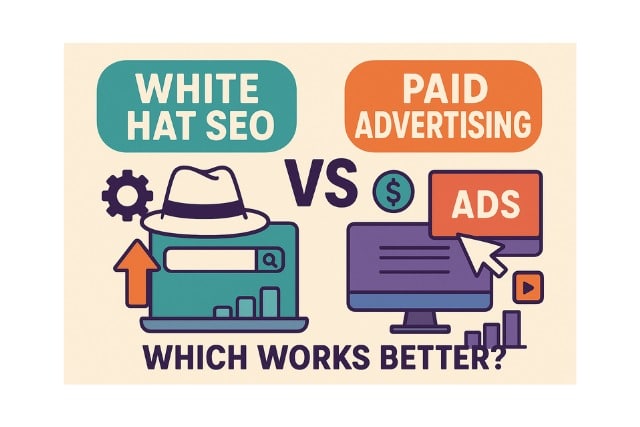
Struggling to choose between organic SEO or paid ads for your business? You’re in good company—many U.S. businesses face this tough call. In 2024, 68% of online experiences started with a search engine, highlighting SEO’s pull.
Yet, companies spent $150 billion on digital ads for instant visibility. Picking the wrong strategy can drain your budget or delay growth.
Let’s unravel the White Hat SEO vs. Paid Advertising: Which Works Better? debate to find the best path for your goals.
Introduction – Organic Growth or Paid Push?
Every business wants to shine online. Should you focus on organic SEO or paid marketing? White Hat SEO uses ethical tactics to rank higher on Google. Paid ads, like PPC, place your brand in front of audiences fast. Both drive traffic and sales, but they differ in approach. Understanding their strengths guides your choice. Let’s dive into each strategy to match your goals.
What Is White Hat SEO?
White Hat SEO follows search engine rules to grow traffic naturally. It prioritizes user value over algorithm tricks. This method builds trust and lasting results. Businesses aiming for steady growth love it.
Definition and Core Principles
White Hat SEO sticks to Google’s guidelines for ethical rankings. It focuses on quality content, user experience, and honest link-building. The aim is organic traffic without shortcuts. Optimizing your site with relevant keywords helps users find you. In 2023, 68% of U.S. online experiences began with a search engine, proving SEO’s reach.
Common White Hat SEO Techniques
White Hat SEO includes on-page, off-page, and technical tactics. These methods build a strong long-term SEO strategy. Key approaches include:
- On-page SEO: Optimize content with keywords and clear headings.
- Off-page SEO: Earn backlinks from trusted websites.
- Technical SEO: Ensure fast site speed and mobile compatibility.
These steps create a solid foundation for growth.
Pros and Cons of White Hat SEO
White Hat SEO delivers lasting results and builds brand trust. Organic traffic costs nothing over time. However, results take months. You need patience and steady effort. Small businesses may find this slow pace tough.
What Is Paid Advertising?
Paid advertising showcases your brand through paid placements. Think Google Ads, social media ads, or display banners. You pay for clicks or views, and results come quickly. Businesses needing fast visibility choose this.
Definition and How It Works
Paid advertising covers PPC, social ads, and display ads. You bid on keywords or audiences to display your ads. Google Ads targets users searching for specific terms. Social ads on Meta or LinkedIn focus on demographics. You set the budget and audience for precision.
Popular Paid Ad Platforms_ White Hat SEO vs. Paid Advertising: Which Works Better?
Major platforms include Google Ads, Meta Ads, and LinkedIn Ads. Each offers unique benefits:
- Google Ads: Targets high-intent searchers.
- Meta Ads: Excels for visual campaigns on Facebook and Instagram.
- LinkedIn Ads: Reaches professionals for B2B marketing.
These platforms connect you with your audience effectively.
Pros and Cons of Paid Advertising
Paid ads provide instant traffic and precise targeting. You track clicks and conversions easily. In 2024, U.S. businesses spent $150 billion on digital ads, showing their popularity. Costs rise fast in competitive niches. When you stop paying, traffic vanishes.
SEO vs PPC Comparison: Key Differences Explained
Let’s compare White Hat SEO and paid advertising directly. Knowing their differences helps you pick the right strategy. We’ll cover cost, speed, sustainability, trust, targeting, and analytics in this SEO vs PPC comparison.
Cost Comparison – Budget vs. ROI
White Hat SEO demands time and effort upfront, but saves money long-term. Tools like SEMrush or content creation cost money, but organic traffic is free. Paid ads require a direct budget for clicks or views. The cost of paid advertising hits $2-$5 per click in competitive fields. PPC vs SEO ROI varies: SEO saves over time; ads deliver quick returns.
Speed of Results – Instant vs. Gradual
Paid ads drive traffic in hours. Launch a Google Ads campaign, and clicks roll in fast. White Hat SEO needs months to rank high. A blog post might take 3-6 months to reach page one. Ads win for quick results; SEO excels for steady growth.
Sustainability – Rankings vs. Pay-to-Play
SEO creates lasting rankings. A well-optimized page drives traffic for years. Paid ads stop when your budget runs out. SEO fuels a digital marketing growth strategy for long-term success. Ads fit short-term campaigns.
Trust and Credibility – Organic vs. Sponsored
Users trust organic results more. A top Google ranking feels earned, not bought. Ads may seem less credible. Many skip “sponsored” labels. SEO builds authority; ads prioritize visibility.
Targeting Capabilities – Intent vs. Segmentation
SEO targets users searching for terms like “best running shoes.” Paid ads target by age, location, or interests. Meta Ads can reach 25-34-year-old runners. Both methods work but serve unique needs.
Analytics and Measurability
SEO tracks organic traffic, rankings, and backlinks with Google Analytics. Paid ads offer clear metrics like click-through rates and conversions. Ads provide instant data; SEO requires long-term tracking.
When to Choose White Hat SEO_ White Hat SEO vs. Paid Advertising: Which Works Better?
SEO suits businesses chasing lasting growth. It’s perfect for those with time for content and optimization. Let’s see when it’s the top choice.
Best Scenarios and Business Types
SEO shines for content-driven businesses like blogs or e-commerce. Local businesses, like cafes or gyms, gain from local SEO. If you want steady traffic without ongoing costs, SEO fits. SEO or ads for a small business help grow affordably.
How to Build an Effective SEO Strategy
Start with keyword research to find audience searches. Create high-quality blogs or guides. Optimize site speed and mobile-friendliness. Build backlinks through guest posts on trusted sites. These White Hat SEO techniques ensure lasting success.
Real-World Examples of SEO Success
A small U.S. bakery ranked for “best cupcakes near me.” With steady blogging and local SEO, they doubled foot traffic in six months. SEO lets them compete with bigger brands on a small budget.
When to Choose Paid Advertising
Paid ads fit businesses needing quick results. They’re ideal for promotions, launches, or seasonal sales. Let’s explore when ads make sense.
Best Scenarios and Business Types
Ads work for e-commerce, event promoters, or new businesses. Launching a product or targeting a specific audience? Ads deliver. A clothing brand can use Instagram ads to reach young shoppers during a sale.
How to Maximize ROI from Paid Campaigns
Set clear goals like sales or leads. Target precisely to save money. Test ad copy and visuals to find winners. Monitor cost-per-click to optimize spending. Smart campaigns boost PPC vs SEO ROI.
Real-World Examples of Ad Success
A U.S. tech startup used Google Ads to promote an app. Targeting specific keywords, they gained 10,000 downloads in a month. Ads gave a quick boost while SEO grew slowly.
Combine SEO and Paid Ads: The Smartest Strategy
Why pick one when you can use both? Combining SEO and paid ads creates a strong marketing plan. Let’s see how they work together.
Why a Hybrid Approach Wins
A hybrid approach balances speed and sustainability. Paid ads drive traffic while SEO builds rankings. Over time, SEO cuts ad spend. So, this mix maximizes reach and results for any business.
How SEO and Paid Ads Complement Each Other
Use ads to test keywords for SEO campaigns. Retarget SEO visitors with ads to boost conversions. A blog visitor might see your ad later and buy. This synergy strengthens your digital marketing growth strategy.
Real Case Studies
A U.S. fitness brand blended SEO and ads. Google Ads drove quick sales during a New Year’s promotion. Their SEO blog ranked for “home workouts,” driving steady traffic. This hybrid approach tripled revenue in 2024.
Which Works Better for Your Business?
Choosing between White Hat SEO and paid ads depends on your needs. Let’s break down how to decide.
Factors to Consider – Budget, Timeline, Goals
Got a tight budget? SEO offers cost-effective growth. Need fast sales? Ads deliver. Consider competition and goals. A search engine optimization vs paid search decision rests on these factors.
Decision Matrix: SEO, Ads, or Both?
Small businesses with time should start with SEO. Quick campaigns need ads. Most benefit from both. Use ads for launches and SEO for steady growth. Test both to find your sweet spot.
Future Outlook – AI and Ads Evolution
AI transforms both strategies. Machine learning sharpens ad targeting on Google Ads. For SEO, AI tools analyze user intent better. Voice search grows, impacting White Hat SEO vs. paid advertising. Staying updated keeps you ahead.
Frequently Asked Questions
Is White Hat SEO better than paid advertising?
No single winner exists. SEO suits long-term growth and authority. Ads excel for quick visibility. Your goals and budget decide.
How long does White Hat SEO take to show results?
SEO takes 3-6 months for noticeable results. Rankings grow traffic without ongoing costs.
Is paid advertising worth it for small businesses?
Yes, especially for instant leads or exposure. Target carefully to manage budgets.
Can I use SEO and paid ads together?
Yes. SEO builds authority; ads boost short-term results. Together, they power growth.
Which is more cost-effective long-term?
SEO saves money over time with free traffic. Ads stop when payments end.
Conclusion – Strategic Balance Drives Success
To wrap up! Deciding between White Hat SEO and paid advertising depends on your business needs. SEO builds lasting traffic and trust with ethical tactics. Paid ads deliver quick visibility and precise targeting. Smart businesses blend both for maximum impact. SEO creates authority over time.
More so, Ads fuel instant results. Align your strategy with your budget, goals, and timeline. Test both to find what drives success. The question: White Hat SEO vs. Paid Advertising: Which Works Better? Lacks one answer. A balanced, data-driven plan ensures you grow smart and dominate your market.


 Presidents' Day Sale - 20% Off
  Groundhog Day Sale - 20% Off