
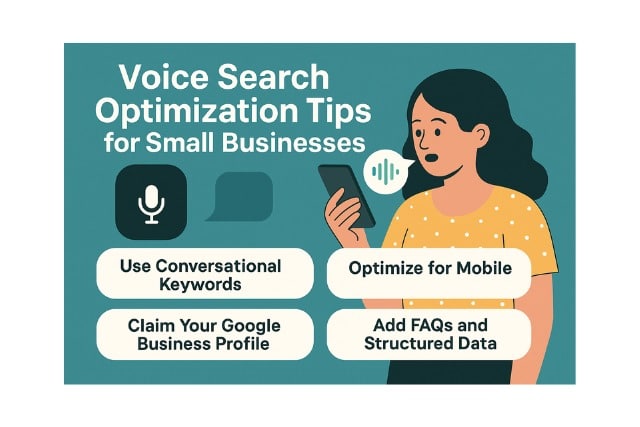
Voice Search Optimization Tips for Small Businesses| Step-By- Step Guide
Voice search optimization tips for small businesses aren’t trendy—they’re essential in 2025. Ever asked Siri or Alexa to “find a nearby coffee shop”?
That’s voice search at work, and if your business isn’t optimized for it, you’re missing out on customers in real time. People now use voice-enabled devices daily—from finding plumbers while washing dishes to hunting for local restaurants while driving.
Voice search has shifted how people discover businesses, and it’s no longer about keywords typed on a screen—it’s about how real people speak.
That’s why Voice Search Optimization Tips for Small Businesses are crucial if you want to show up when someone says, “Hey Google, find [your service] near me.”
So, this guide walks you through exactly how voice search changes local SEO—and what practical steps will help your business rank higher, attract more foot traffic, and win ready-to-buy customers today.
What Is Voice Search Optimization?
First, voice search optimization is easy to grasp. Customers use Siri, Alexa, or Google Assistant to search. They ask full questions, like, “Where’s the best bakery near me?” These queries sound natural, like everyday talk.
Voice SEO for local businesses matches these spoken phrases. It helps your website appear in voice results. Unlike typing, voice searches are longer and question-based.
Knowing this helps you optimize for Google Voice search. It’s your key to reaching local customers. Start optimizing to stay visible.
Why Voice Search Matters for Small Businesses in 2025
Next, voice search is huge for small businesses. In the U.S., 50% of adults use voice search daily (Statista, 2025). Also, 65% of voice searches target local businesses (BrightLocal, 2025).
Customers use phones, smart speakers, or car systems to find shops. They say, “Find a salon open now.”
Moreover, this trend makes voice search optimization tips for small businesses critical. It drives foot traffic and sales. Optimizing now puts you ahead of competitors. Don’t miss this chance to grow. Act today to boost visibility.
How Voice Search Differs from Traditional SEO
Moreover, voice search differs from traditional SEO. People type short phrases but speak full questions. Voice queries are conversational, like “What’s the best pizza near me?” They focus on long-tail keywords.
Voice search ranking tips include targeting these phrases. Google loves quick answers, like featured snippets. Local packs, such as business listings, rank high, too.
Understanding these differences helps you optimize for Siri and Alexa. It sets your business up for voice success. Use these tips to rank higher.
Understanding Local Customer Behavior in Voice Search
Now, customers use voice search for instant answers. They search on the go, needing nearby services. Someone might ask, “Where’s a plumber near me?” These “near me” searches show high purchase intent.
Micro-moments, like needing a quick coffee, drive voice queries. Voice SEO for local businesses taps into these moments. It builds trust with fast, accurate results.
Optimizing for these behaviors brings more customers to your door. It’s a game-changer for small businesses. Start targeting these searches today.
Top Voice Search Optimization Tips for Small Businesses
So, how do you start optimizing? Claim your Google Business Profile first. Add your name, address, and hours accurately. Use conversational keywords like “best tacos near me.” Write blogs that answer customer questions directly.
Make your website mobile-friendly and fast. Add local schema markup to stand out. Encourage reviews to boost trust. These voice assistant SEO tips are easy to follow.
They help small businesses rank higher in voice searches. Start today to see results fast.
Voice Search Optimization Tips with AI Tools
Furthermore, AI tools make voice search optimization easy. Tools like Jasper or SurferSEO create conversational content fast. They find long-tail keywords, like “open coffee shops near me.” These tools add schema markup automatically.
They ensure your site ranks for Google My Business voice search. Voice search optimization tips for small businesses include using AI. It saves time and boosts rankings.
Even beginners can use these tools effectively. Try one to simplify your SEO. Get started now for better results.
Optimize Your Google Business Profile for Voice Search
Next, your Google Business Profile is a must. Claim it and add your business name. Include your address, phone, and hours accurately. Add photos of your shop or services.
Choose the right category, like “restaurant” or “salon.” Encourage customers to leave reviews. These steps boost Google My Business voice search rankings.
They make your business appear in map packs. A strong profile drives more local customers. Update it regularly to stay visible. Keep your info fresh for success.
Craft Content for Conversational Voice Queries_Voice Search Optimization Tips for Small Businesses
Also, the content needs to match how people talk. Customers ask, “What’s the best gym near me?” Write blogs that answer these questions directly.
Use tools like AnswerThePublic to find popular queries. Include conversational keywords for SEO in your posts. For example, write, “Best pizza places open now.” Keep sentences short and natural.
In addition, this matches how voice assistants read answers. Good content boosts your voice search ranking tips. It brings more local shoppers to you. Create voice-friendly content today.
Boost Page Speed and Mobile Usability
Moreover, voice searches mostly happen on phones. A slow website loses customers fast. Use Google PageSpeed Insights to check your site’s speed.
Make it load in under three seconds. Ensure your site works well on mobile devices. Simple designs help users navigate easily. Mobile SEO for voice search is critical for rankings. Test your site on phones and tablets.
Fast, user-friendly sites rank higher in voice results. Optimize now to keep customers happy. Speed up your site today.
Use Schema Markup to Boost Voice Search Visibility
Then, schema markup helps voice assistants find you. It’s code that explains your business details. Use the LocalBusiness schema to share your address and hours. Add FAQ schema for common customer questions.
Furthermore, this makes your site voice-friendly. Tools like Schema.org guide beginners to add markup. Experts can use an advanced schema for better results. Schema boosts local SEO voice search strategies.
It helps you rank in featured snippets. Start using it to stand out. Add markup to your site now.
Real-Life Success Stories: Voice Search Wins
Next, real businesses show voice search’s power. A Chicago bakery targeted “best donuts near me.” They used AI tools for conversational content.
Their Google Business Profile added fresh photos and reviews. Foot traffic jumped 30% in three months. A Texas gym optimized for “yoga classes near me.” Their blog hit featured snippets, doubling sign-ups. These wins prove that voice search optimization tips for small businesses work.
They drive customers via smart speaker local SEO. You can achieve similar results with effort. Start optimizing to see wins.
Common Voice Search SEO Mistakes to Avoid
However, businesses make simple mistakes. Don’t skip mobile optimization; voice searches happen on phones. Avoid keyword stuffing—it hurts your rankings. Keep your Google Business Profile updated with correct hours.
Don’t ignore reviews; they build trust. Missing schema markup reduces visibility. AI tools catch these errors early. They ensure your site follows voice search ranking tips.
Avoiding these pitfalls keeps your voice SEO for local businesses strong. Stay proactive to win more customers. Fix these issues now.
Tools to Track and Measure Voice Search Performance
Also, tracking progress strengthens your strategy. Use Google Search Console to check “near me” rankings. Google Analytics shows impressions and clicks. Google Business Profile Insights tracks calls and visits.
SEMrush and BrightLocal offer voice search traffic insights. These tools help you measure performance in 2025. They show which keywords drive results. Adjust your content based on this data.
It keeps your local SEO voice search strategies effective. Monitor regularly to stay competitive. Track your progress starting today.
Voice Search Optimization Checklist for Small Businesses
Next, a checklist makes optimization easy. Claim and update your Google Business Profile. Use conversational keywords in blogs and FAQs. Make your website mobile-friendly and fast.
Add Local Business and FAQ schema markup. Encourage customer reviews for trust. Test site speed with Google Page Speed Insights.
Use AnswerThePublic for query ideas. Track rankings with SEMrush or Bright Local.
So, this voice search optimization checklist saves time. It helps small businesses start fast and succeed. Follow it to boost rankings.
Future Trends in Voice Search for Small Businesses
Looking ahead, voice search will keep growing. AI advancements make voice assistants smarter. Voice commerce, like ordering via Alexa, will rise. Multilingual search will reach diverse customers.
Google will tie voice results to local packs tighter. These changes shape Google Assistant SEO tips in 2026. AI tools prepare you for these trends.
They craft future-ready content for smart speaker local SEO. Acting now gives you a big advantage. Stay ready for what’s next.
Frequently Asked Questions
What is voice search optimization?
Voice search optimization helps your site rank for spoken queries. It targets conversational phrases used with voice assistants.
Why is voice search important for small businesses?
Most voice searches target local shops or services. Optimizing brings more customers to your door.
How do I optimize for voice search?
Claim your Google Business Profile, use conversational keywords, and boost mobile speed. Add schema markup for better rankings.
What are “near me” searches?
Voice queries like “best plumber near me” show strong purchase intent. They target local businesses.
Which tools help with voice SEO?
Answer ThePublic, SEMrush, and Bright Local find queries and track performance. AI tools like Jasper create voice-friendly content.
How is voice search SEO different from regular SEO?
Voice queries are longer and conversational. Content must match spoken language to rank.
Conclusion
Lastly, voice search is how customers find you in 2025. Voice search optimization tips for small businesses boost your rankings. Use conversational keywords and a strong Google Business Profile.
Furthermore, make your site fast and mobile-friendly. Add schema markup to shine in voice results. These steps help you beat bigger competitors.
AI tools simplify the process for busy owners. When someone asks, “Where’s the best shop near me?” your business should be the answer. Start today to win more customers.


 Presidents' Day Sale - 20% Off
  Groundhog Day Sale - 20% Off