
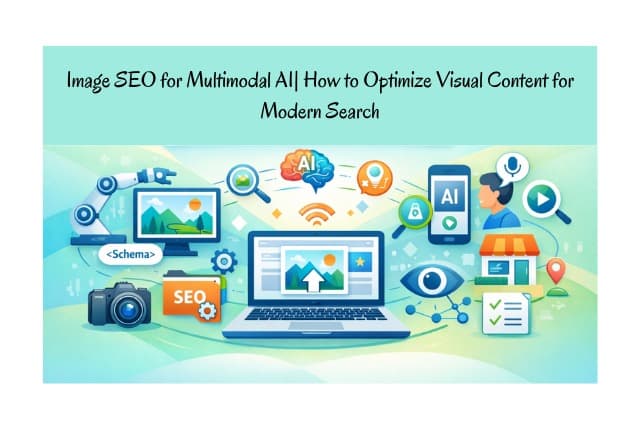
What is Image SEO for Multimodal AI and how does it help your visual content rank higher in modern search? Many websites still treat images as decoration. Today, AI systems read, analyze, and rank images as real search assets.
When you optimize images the right way, you unlock visibility in AI search, visual search, and discovery platforms. Search is no longer just about text. Modern search engines now understand images, videos, and voice together.
More so, Image SEO for Multimodal AI becomes essential. It powers discovery in 2026. Teams optimize visuals smart. They gain strong rankings. It combines technical fixes with context. It uses schema markup.
Not only that, but it adds conversational alt text. Also, it prepares content for AI models. It drives traffic higher. Brands see real results.
Moreover, search engines change rules every year. Multimodal AI mixes different inputs. Google Lens handles billions of queries. Users snap photos for answers. AI understands scenes deep. The change makes images central. Brands that ignore it lose out. Optimization turns visuals into assets. Visibility grows fast.
Furthermore, this guide teaches key steps. It explains how AI reads images. It shows technical best practices. You learn alt text and schema. Image SEO for Multimodal AI helps every site. Bloggers gain traffic. Stores sell more products. Businesses stand out clear.
Why Image SEO Matters in the Age of Multimodal AI Search_ Image SEO for Multimodal AI
Today, search engines evolve through artificial intelligence that combines text, images, and voice into unified understanding systems.
Therefore, users now upload photos to search engines instead of typing long questions into search boxes. Google Lens processes billions of image searches every month across global mobile and desktop platforms.
As a result, visual discovery now drives a growing share of total organic search traffic worldwide. AI search engines now read context, detect objects, and interpret meaning inside uploaded images.
Consequently, brands must optimize images for machine understanding instead of focusing only on visual design. Performance now affects visual rankings across mobile, desktop, and assistant-driven search environments. Slow-loading images reduce engagement signals and weaken overall search performance metrics.
What Is Multimodal AI and How It Changes Image Search
Today, multimodal AI systems process text, images, voice, and video within a unified understanding framework. Search engines no longer treat images as decorative elements without ranking value.
Google Vision analyzes pixels, objects, colors, and spatial relationships inside uploaded images. Gemini interprets scenes and matches visual content with search intent.
Furthermore, ChatGPT describes images and extracts meaning from visual inputs for conversational answers. Perplexity connects image entities with real-world knowledge graphs and search databases.
Search now delivers complete answers that combine visuals with supporting text and data. As a result, image optimization directly influences ranking performance inside AI-generated search results.
Traditional Image SEO vs. Multimodal Image SEO
Previously, image SEO focused on compression, alt text, and basic indexing requirements. Today, multimodal image SEO focuses on meaning, relevance, and machine understanding.
AI systems now evaluate originality, authenticity, and visual clarity inside image assets. Stock photos provide less ranking value than original branded visuals.
Furthermore, AI models detect manipulation and low-quality imagery through advanced vision analysis. Modern image SEO requires strong production standards and real-world visual representation.
How Modern AI Models Interpret Visual Content
AI models scan pixel data and extract structured information from image files. Gemini identifies objects, settings, and human presence inside visual environments.
Google Vision extracts embedded text and maps visual elements into searchable entities. ChatGPT converts visual scenes into descriptive language for assistant-driven answers.
Furthermore, Perplexity links images to real-world concepts and authoritative knowledge sources. Interpretation accuracy now determines ranking placement across AI discovery systems.
Core Technical Optimization for Image SEO
Technical image optimization forms the foundation of multimodal search visibility.
Therefore, file formats, compression, and naming conventions directly influence indexing performance. Image speed affects user engagement signals across mobile and desktop environments. Performance optimization improves crawl efficiency and ranking stability.
AI systems favor sharp, clear, and well-structured visual assets. Quality and relevance drive long-term visibility across discovery platforms.
Image File Formats and Compression for AI Search
Modern image SEO requires efficient file formats that preserve quality while reducing load size.
Best performing image formats for multimodal AI search include:
- WebP for balanced compression and clarity
- AVIF for advanced quality preservation
- JPEG for compatibility and wide support
- PNG for graphics and transparency
Therefore, compression must balance clarity with performance to satisfy ranking systems.
Image File Naming and Metadata for Machine Understanding: Image SEO for Multimodal AI
Search engines rely on filenames to identify and categorize image content.
Best practices for machine-readable image files include:
- Descriptive filenames with relevant keywords
- Hyphen-separated naming conventions
- Clear subject identification
- Location and product context inclusion
As a result, structured metadata improves indexing speed and discovery accuracy.
Creating High-Quality and Authentic Images for AI Detection
AI systems detect duplicate content and low-quality visuals through pattern recognition. Original photography delivers stronger trust and ranking signals.
Moreover, high-resolution images improve visual clarity across search and assistant platforms. Authenticity builds authority and improves long-term brand visibility.
Consistent brand visuals strengthen entity recognition across AI search engines. Visual consistency improves discovery and recall inside multimodal environments.
Optimizing Text in Images for OCR Recognition
AI systems extract text from images using optical character recognition technology. Text inside images must remain clear and readable for machine extraction. High contrast improves recognition accuracy across mobile and desktop platforms.
As a result, readable visuals improve accessibility and search performance metrics. OCR-friendly design improves discoverability inside image and assistant search systems. Readable image text supports ranking relevance and indexing precision.
Writing AI-Friendly Alt Text and Image Descriptions
Alt text describes visual content for search engines and accessibility platforms. Descriptive language helps AI understand image meaning and context. Captions provide supporting relevance signals for semantic interpretation.
As a result, surrounding content strengthens vector embeddings and topic relevance. Image descriptions improve indexing across visual search databases. Clear language improves discovery across multimodal search channels.
Using Structured Data for Image SEO
Image structured data provides machine-readable signals for search engines and assistant platforms. Image Object schema improves visibility inside rich results and AI summaries.
Moreover, product images benefit from price, availability, and review markup. Structured data increases click-through rates and discovery potential.
Visual markup supports knowledge graph integration and entity recognition. Schema strengthens trust and authority across AI-powered search experiences.
Teaching AI Visual Entities Through Image SEO
Entity SEO connects images to brands, locations, and real-world concepts. AI systems learn visual relationships through consistent representation.
Moreover, object identification improves semantic understanding across discovery platforms. Brand recognition improves inside assistant-driven answers and summaries. Concept mapping improves ranking stability across competitive search categories. Entity optimization builds long-term visibility and trust.
Context Optimization for Visual Understanding
AI systems analyze surrounding content to interpret image meaning. Semantic relevance improves vector embedding accuracy. Descriptive paragraphs strengthen topical authority signals. Search engines match images with intent-driven queries.
Furthermore, internal linking improves crawl efficiency and topic coverage. Context optimization improves ranking consistency and discovery placement.
Specialized Image SEO Use Cases
E-commerce platforms rely on visual discovery for product searches and purchase decisions. Optimized product images increase conversion and organic traffic growth.
Local businesses benefit from image optimization inside maps and reviews. Local discovery improves foot traffic and brand trust. Infographics support informational queries and educational search intent. Social platforms amplify reach through visual sharing signals.
Measuring Image SEO Performance
Search Console provides image indexing and performance tracking insights. Impressions reveal discovery reach across visual search platforms. Click-through rates indicate content relevance and appeal.
As a result, engagement metrics guide optimization strategy decisions. Assistant platforms track image inclusion inside AI summaries. Analytics drive continuous improvement and ranking stability.
Common Image SEO Mistakes to Avoid
Low-quality images weaken ranking signals across discovery systems. Pixelated visuals reduce trust and engagement metrics. Missing alt text limits machine understanding and accessibility. Indexing performance suffers across image databases.
So, oversized files reduce page speed and crawl efficiency. Performance issues reduce ranking stability and discovery placement.
Final Checklist for Multimodal Image SEO Success
Strong image SEO requires consistent production standards and technical optimization. Teams must follow best practices across all visual content workflows. Structured data improves machine understanding and discovery reach.
As a result, entity optimization strengthens brand authority across AI platforms. Performance optimization improves ranking stability and user experience. Continuous improvement drives long-term growth and visibility.
Frequently Asked Questions
What is Image SEO for Multimodal AI?
Optimizing images so AI models (Gemini, Google Vision, ChatGPT, Perplexity) can understand, index, and rank them in visual, conversational, and multimodal search results.
Why does Image SEO matter more in 2026?
AI now pulls images into overviews, Lens answers, product cards, and assistant replies — unoptimized visuals get ignored or ranked lower.
How do I write alt text for AI-friendly images?
Use natural, descriptive, conversational language that includes key entities, actions, and context (e.g., “women’s navy blue leather sneakers for summer casual outfits”).
What technical fixes improve image ranking in multimodal search?
Use WebP/AVIF formats, strong compression, fast load times, OCR-readable text, high-quality originals, descriptive filenames, and structured data (Image Object schema).
Does schema markup still help images in AI search?
Yes — Image Object, Product, and Visual schema make AI confidently feature your images in rich results, carousels, and overviews, especially for e-commerce.
At Last Words
Lastly, Image SEO for Multimodal AI defines how brands compete inside modern search ecosystems. Visual content now drives discovery across AI summaries, assistants, and search engines. AI systems treat images as readable and rankable information assets.
As a result, optimized visuals increase trust, authority, and organic traffic growth. Strong image SEO teaches machines what content means and why relevance matters. Brands appear inside AI overviews, product cards, and assistant answers.
Ultimately, Image SEO for Multimodal AI shapes future visibility across every search platform. Teams that optimize today secure long-term dominance inside AI-powered discovery systems.


 Presidents' Day Sale - 20% Off
  Groundhog Day Sale - 20% Off