
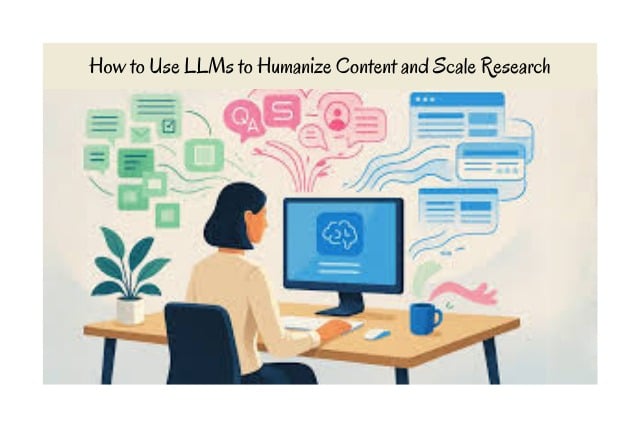
Have you struggled to make AI content sound human while research keeps taking too much time? Many creators used AI fast, but readers felt the content lacked trust and emotional depth.
More so, that changed when teams learned how to use LLMs to humanize content and scale research using structure, intent, and human control.
AI tools now write faster than people, yet speed alone never builds long-term trust. Readers seek clarity, consistent tone, and insight drawn from real experience. Search engines reward helpful content that answers intent while maintaining readability standards.
Therefore, LLMs help creators succeed when used with guidance and human oversight. Learning how to use LLMs to Humanize Content and Scale Research means treating AI as support.
LLMs gather data, connect ideas, and assist in structure without replacing human judgment.
So, humans guide tone, accuracy, experience, and audience alignment at every stage. Together, AI and people create natural content while research moves faster without quality loss.
Why AI Content Often Feels Robotic and Research Struggles to Scale
First, acknowledge reality because AI writes quickly but lacks emotional intelligence. Sentences repeat patterns, tone remains flat, and stories fail to connect deeply. Readers lose interest quickly, engagement drops, and trust erodes across platforms.
Meanwhile, research workflows struggle because manual processes consume excessive time and effort.
Teams scan endless documents, miss emerging trends, and delay important decisions. As data expands, humans alone struggle to process insights efficiently.
Therefore, LLMs address both problems when guided by strong human direction. They detect patterns, summarize information, and accelerate discovery at scale. However, success depends on AI content humanization and structured research workflows.
What Large Language Models Really Are and How They Work
Next, understand fundamentals because clarity improves results and prevents misuse. LLMs train on massive text datasets including books, websites, and public conversations. Models predict word sequences based on probability, producing natural language responses.
Popular tools process large datasets quickly while identifying relationships humans often miss. Creators use LLMs for human-first AI writing and AI-assisted research support.
More so, strong guidance ensures output aligns with purpose, tone, and factual expectations. Think of LLMs as skilled assistants responding best to clear instructions. Poor guidance creates weak output, while precise direction unlocks valuable results.
Defining Humanized Content in the AI Era_ How to Use LLMs to Humanize Content and Scale Research
Now, define goals because clarity shapes quality and reader trust.
Humanized content sounds natural, balanced, and reflective of lived experience.
Sentence variation, storytelling, and clear opinions help readers connect emotionally. Search engines favor helpful pages that demonstrate depth and relevance.
In addition, SEO content with LLMs performs best when shaped by a human perspective. Raw AI output lacks originality until humans add insight and context. AI-driven content humanization transforms drafts into meaningful communication that aligns with brand values.
Advanced Techniques for Adding Personality and Original Perspective
Next, add personality through strategic prompts and intentional editing. Writers should guide tone by requesting conversational language and emotional cues. Personal stories and honest reflections build trust and reader connection.
Creators gain originality by asking for contrasting viewpoints and deeper analysis. LLMs surface options, while humans choose angles matching audience expectations.
Setting the Foundation Before Using LLMs
First, establish a brand voice because consistency builds recognition and trust. Creators must define audience intent, pain points, and desired outcomes clearly. LLMs support drafting, outlining, and research, but should never replace judgment.
More so, avoid sensitive decisions without review because human oversight protects credibility. Balanced collaboration ensures speed without sacrificing authenticity or ethical standards.
Prompt Engineering for Human-Like Output
Prompt quality determines output quality, making prompt engineering essential for writers. Clear instructions produce focused responses aligned with tone and structure. Effective prompts specify style, sentence length, emotional tone, and the context of the audience.
Therefore, creators should test prompts, refine language, and iterate for stronger results. Strong prompts improve workflow consistency and content reliability.
Scaling Research with LLMs Effectively
LLMs transform scalable content research by accelerating discovery and synthesis. They assist with topic exploration, trend analysis, and summarizing large datasets.
Common research tasks delegated to LLMs include:
- Topic clustering and trend identification across large datasets
- Initial summaries of studies, reviews, and public discussions
Human experts must review findings to ensure accuracy and contextual relevance. AI-assisted research increases output while maintaining strategic depth.
Delegation Versus Human Verification_ How to Use LLMs to Humanize Content and Scale Research
Next, delegate repetitive tasks like sorting data and summarizing sources. Humans must retain responsibility for judgment, creativity, and ethical evaluation.
Fact verification ensures credibility while protecting brand authority. Balanced delegation aligns efficiency with accuracy and long-term trust.
Editing AI Output for Trust and Accuracy
Raw AI output requires editing before publication to meet quality standards. Editors add voice, remove repetition, and verify factual claims carefully.
Furthermore, source validation prevents hallucinations and strengthens audience confidence. AI content quality control transforms drafts into polished, trustworthy assets.
Balancing Readability, Search Intent, and SEO Performance
Strong content uses simple language and logical structure for easy reading. Creators must match search intent while addressing user needs directly.
SEO content with LLMs succeeds through usefulness rather than manipulation.
Advanced Team Workflows and Performance Measurement
Teams scale efficiently using repeatable workflows supported by LLM tools. Different models support writing depth, research speed, and idea generation.
So, performance metrics include engagement, dwell time, and content clarity.
Quality evaluation often includes:
- Reader engagement signals across platforms
- Consistency with brand tone and audience expectations
Workflow consistency ensures growth without quality decline.
Ethical Practices and Common Mistakes
Ethical AI content creation requires transparency, attribution, and bias awareness. Overreliance on AI without review weakens voice and credibility.
Thus, responsible practices ensure sustainable growth and audience trust.
The Future of AI-Assisted Content and Research
Looking ahead, LLMs continue evolving toward stronger human-like understanding. Successful creators adopt a co-pilot mindset where humans guide strategy. Those mastering How to Use LLMs to Humanize Content and Scale Research gain a lasting advantage.
Frequently Asked Questions
What does humanizing content with LLMs involve?
Humanized content feels natural and helpful through human editing and thoughtful AI support.
How do LLMs scale research processes?
LLMs summarize information, identify patterns, and accelerate insight discovery efficiently.
Can beginners use LLMs effectively?
Beginners succeed using simple prompts combined with careful editing and fact checks.
How do experts approach LLM usage differently?
Experts combine AI output with experience, data validation, and strategic insight.
How does humanized AI content support SEO goals?
Human-edited AI content improves clarity, engagement, and relevance for search engines.
Conclusion
Lastly, LLMs reshape content creation and research, yet speed alone never builds trust. Clarity, purpose, and human guidance define lasting success in digital publishing.
More so, when creators master How to Use LLMs to Humanize Content and Scale Research, AI becomes support. Humans remain decision makers while content stays useful and research scales responsibly.


 Presidents' Day Sale - 20% Off
  Groundhog Day Sale - 20% Off