
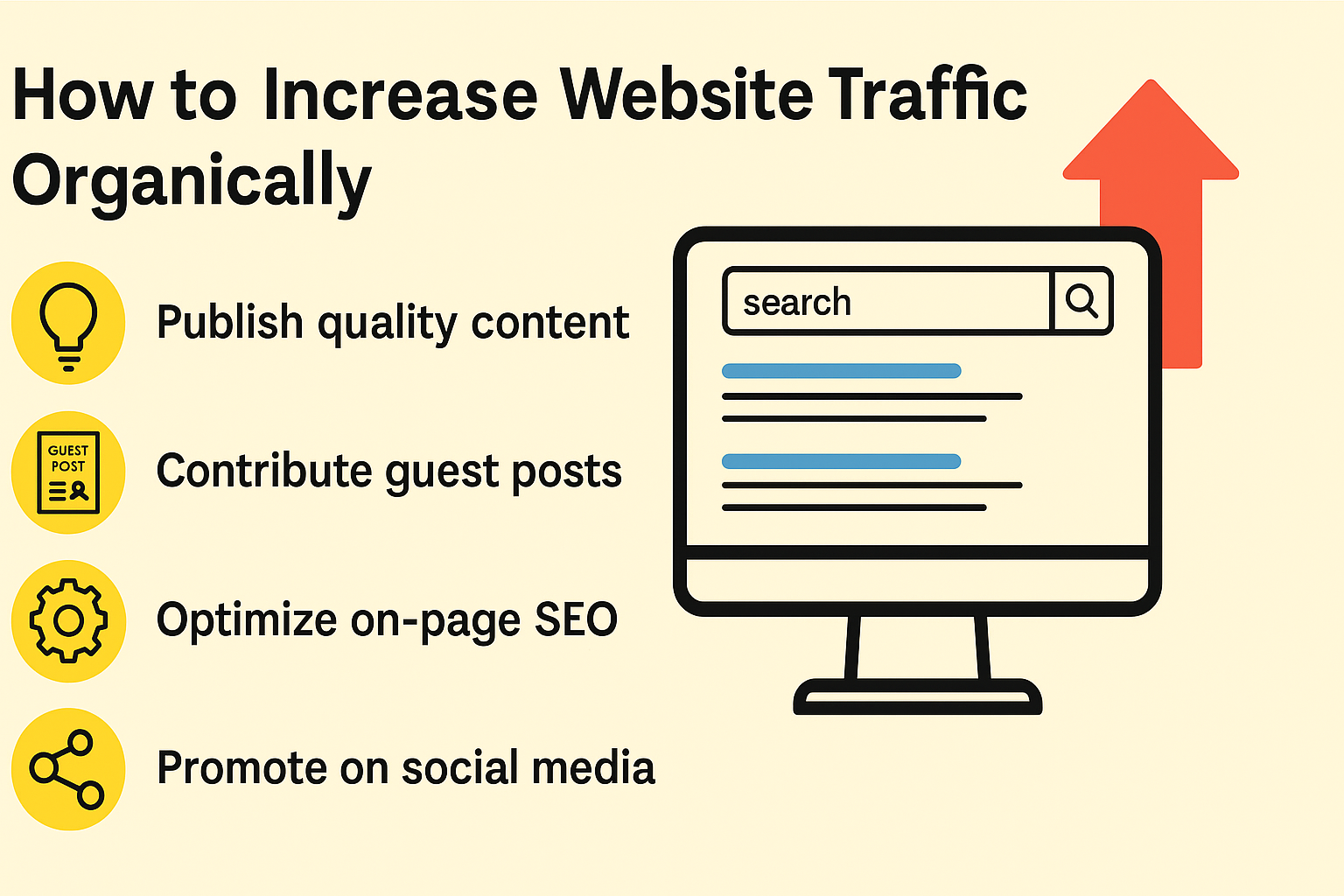
Growing a website’s traffic without paid ads sounds like a slow burn—and it often is. But that doesn’t make it any less effective. In fact, organic traffic tends to convert better, stick around longer, and engage more consistently over time. The catch? It takes more than just publishing content and waiting for search engines to notice.
For service-based websites where core offerings are already fully covered, the next logical step is building authority—strategically, carefully, and with intention. This means leveraging smart content practices, natural SEO, and proven organic traffic strategies that support the business’s core without competing against it.
Let’s unpack how websites can increase traffic organically—and more importantly, how real businesses are actually doing it today.
Content That Earns Attention (Not Just Rankings)
Informational content isn’t just filler—it’s leverage. When done right, it becomes the bridge between a search query and a service page. Yet, far too often, websites focus so much on conversion that they forget discovery.
Understanding Search Intent Is Half the Battle
Not all traffic is good traffic. A how-to article written purely to rank can misfire if it attracts visitors who have no interest in your actual services.
- A blog post about “how to design a business card” might bring in DIYers, not potential clients looking for professional branding services.
- On the other hand, a well-researched article like “What Makes a Business Card Effective in 2025?” may attract professionals who value expert input—and are closer to hiring.
That nuance matters. Organic traffic grows not just from keywords, but from aligning content with real, relevant intent.
Support Pages, Don’t Compete With Them
If service pages are already in place, content should act like satellites—drawing in long-tail traffic and pushing authority toward the core.
Consider:
- Creating blog posts that answer peripheral questions prospects have before committing to a service.
- Using internal links wisely, pointing to service pages with contextual relevance.
- Avoiding keyword cannibalization by targeting variations, not duplicates.
A content audit often reveals overlaps. It’s worth reviewing to ensure each piece has a unique role in the traffic ecosystem.
Real Data Always Wins
Here’s the thing—articles that include actual numbers, case studies, or unique insights perform better. Period.
In one example, a B2B site that added a simple chart showing year-over-year ROI from SEO saw a 43% increase in organic clicks within 60 days. People share and trust data. Vague content rarely gets revisited.
Building Authority with Smart Guest Posting
Let’s talk about guest posting—a misunderstood tactic that still works when done with purpose, not just for backlinks.
What Is Guest Posting, Really?
Despite thousands searching “what is guest post” each month, many still think it’s just a link-building tactic. The truth? Guest posting is brand building.
- It’s writing content for other websites within your niche.
- It builds credibility by association.
- It exposes your expertise to a new audience.
But is it worth it?
When approached strategically—absolutely.
Guest Blogging SEO Done Right
Generic guest posts get ignored. Quality guest posts, on the other hand, deliver:
- Referral traffic from relevant sources
- Contextual backlinks that strengthen topical authority
- A reputation boost through association with credible domains
An SEO guest posting service can help streamline this, but only if it emphasizes quality and relevance. Business guest posting should never be about volume—it’s about fit.
The Real Impact of Guest Posting for SEO
Consider this: a single guest blog on an industry-leading site once led to a 22% jump in branded search traffic for a mid-sized consultancy. That’s not from backlinks—it’s from visibility.
Guest blogging isn’t about quantity. One good guest post, shared in the right circles, often outperforms dozens of low-tier ones
On-Page SEO That Doesn’t Feel Like SEO
Organic traffic begins with discoverability, but retention starts with clarity.x
Fix the Technical Details (But Don’t Overthink Them)
Title tags, meta descriptions, URL structures—these matter. But obsessing over them while ignoring readability is a trap.
Instead, think:
- Simple, scannable content with headers that reflect what users are searching.
- Natural keyword placement (not repetition) that fits into the flow of the article.
- Internal linking that actually helps users navigate—not just juice SEO.
Use NLP-Optimized Language (Without Stuffing)
Semantic SEO matters more today than keyword counts. Google’s AI understands related terms.
So rather than overusing “guest posting,” consider how people talk about it:
- What is guest blogging?
- Guest posts for SEO
- Importance of guest posting in SEO
These aren’t just phrases—they’re questions people ask. Write to answer them.
Content Depth Beats Length
A 600-word article that deeply explains “what is guest posting in SEO” will outperform a shallow 1500-word post every time.
Use subheadings, lists, bolded takeaways, and real examples to keep readers engaged. When content feels valuable, users stay longer—and that sends quality signals to search engines.
Organic Promotion Without Paid Boosts
Traffic doesn’t start and stop at Google. Multi-channel discovery plays a role in any successful organic strategy.
Leverage Social Sharing Without Being Salesy
Educational content—especially helpful guides and detailed explainers—tends to do well on platforms like LinkedIn, Reddit, and niche forums. Not through ads, but through authentic engagement.
- Post insights, not links.
- Start discussions based on the content.
- Answer questions, referencing your articles without spamming.
It’s a slower build, yes. But the trust gained sticks longer than a click-through ad.
Repurpose, Don’t Just Repost
Turn blog posts into:
- Short carousels for Instagram or LinkedIn
- Audio clips or Q&A formats for podcasts
- Email newsletter breakdowns
Organic growth multiplies when one piece of content becomes many paths of discovery.
Collaborate With Complementary Brands
Co-authored blogs, newsletter swaps, or even cross-promotion in webinars can introduce your content to warm audiences—without needing to outbid competitors for visibility.
This is especially valuable for business guest posting. Trusted partnerships often unlock guest blog opportunities that generic outreach can’t touch.
Keeping Readers Coming Back
So traffic arrives. Now what?
Repeat visits aren’t automatic. They’re earned.
Build Topic Clusters That Create Journey Paths
One isolated article isn’t enough. Visitors should be guided from curiosity to clarity to consideration.
A solid internal link strategy might look like:
- “What is guest posting?” → “Guest posting for SEO” → “Choosing a quality guest post partner”
- Each one building on the last, naturally pointing to the next step.
Search engines reward well-structured content ecosystems. So do humans
Encourage Engagement (Quietly)
Prompting comments, offering downloadable guides, or asking subtle questions in the content (“Ever had a guest blog drive zero traffic? Why?”) creates opportunities for deeper connection—without hard sells.
An email signup at the bottom should feel like the logical next step, not a pop-up interruption.
Frequently Asked Questions (FAQ)
What is guest posting and how does it help SEO?
Guest posting is writing articles for other websites to build credibility, drive referral traffic, and earn backlinks. It supports SEO by increasing authority and search engine trust.
How long does it take to increase website traffic organically?
Organic traffic growth is gradual. Some businesses see results in 3–6 months with consistent content publishing and SEO optimization. Others may take longer, especially in competitive industries
Is guest blogging still effective in 2025?
Yes, when done thoughtfully. Quality guest blogging on relevant sites still brings visibility, builds authority, and contributes to SEO rankings—especially when tied to topic relevance
Should businesses outsource SEO guest posting services?
Only if the service prioritizes content quality, industry relevance, and ethical outreach. Many low-tier providers focus on volume over value, which can hurt more than help.
What’s the difference between a guest blog and a guest post?
Functionally, they’re the same—both refer to publishing content on another site. “Guest blog” tends to describe the format; “guest post” refers to the act.
Summary
Increasing website traffic organically isn’t about hacks or shortcuts. It’s a long-term effort that rewards consistency, relevance, and trust. For service-focused websites, supporting the core offering with targeted informational content, quality guest blogging, and optimized user journeys creates a powerful foundation for discovery.
Guest posting remains a vital part of the organic puzzle—not as a backlink strategy alone, but as a brand exposure tool. And when combined with topic clusters, natural language optimization, and thoughtful repurposing, it forms a self-sustaining ecosystem that keeps traffic flowing without relying on ads.
The result? Not just more traffic—but the right kind of traffic. The kind that stays. The kind that converts. The kind that tells Google—and users—that the site is worth returning to.


 Presidents' Day Sale - 20% Off
  Groundhog Day Sale - 20% Off