
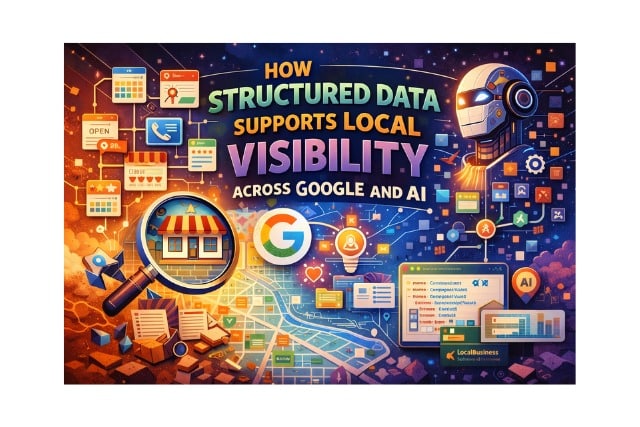
Why do some local businesses appear clearly in search results while others are hard to find? Many business owners spent years improving websites and local listings to appear on Google search pages.
However, search engines started evolving as artificial intelligence began influencing how information is discovered. Soon, marketers started asking an important question about how structured data supports local visibility across Google and AI. Could structured data help search engines and AI systems understand local businesses better?
Moreover, local search has changed significantly during the past few years. Search engines no longer rely only on keywords and basic website content to understand businesses.
Instead, modern search systems analyze structured information that clearly explains what a business does, where it operates, and how customers interact with it.
Therefore, structured data becomes important right now. Understanding How Structured Data Supports Local Visibility Across Google and AI helps businesses improve their presence in search results, maps, and AI-generated answers. Structured data provides search engines with organized information about a business, including location, services, reviews, and contact details.
As a result, Google and AI-powered search tools become smarter every day. Companies that organize their information clearly make it easier for search engines and AI systems to connect users with relevant local services.
What Is Structured Data and Why Local Businesses Need It Now
Furthermore, structured data works like clear labels on your business info. Owners add special code to their websites every single week now.
Machines read the code and understand your name and location. Search engines trust the details more than plain text alone. Local businesses need this help because AI systems grow smarter daily.
Definition Of Structured Data And Schema Markup
Owners use schema markup to label every important business fact clearly. The code follows rules from Schema.org for perfect accuracy. The LocalBusiness schema tells Google your exact address and hours. AI systems read the labels and avoid wrong guesses later.
How It Helps Google and AI Understand Your Business
Google reads the markup and connects your site to Maps results. AI systems pull verified facts for summaries without mistakes. Businesses gain trust signals that boost their entity strength. Customers find accurate details across every search surface.
Why It Matters More In The AI-Driven Search Era
AI Overviews appear in forty-four percent of queries these days. Local businesses lose visibility without clear markup on pages. Schema markup for local businesses keeps your info consistent everywhere. Google local search visibility depends on machine-readable signals now.
The Shift in Local Visibility: From Maps to AI Overviews
As a result, local discovery changed from simple blue links years ago. People once clicked three-pack results inside Google Maps. AI
Overviews now answer questions directly on the results page. Zero-click searches rise and force businesses to adapt quickly. Structured data bridges the gap between old and new search styles.
Traditional Local Pack, Maps, and Rich Results
Google shows three businesses in the Local Pack for nearby queries. Owners add schema to earn rich results with star ratings. Map pins appear clearer when markup matches your profile. Local search ranking factors reward accurate data every time.
Integration with Google Business Profile
Businesses link their site markup to Google Business Profile details. Consistent NAP data strengthens signals across both platforms. AI-powered search results respect the combined information sources. Local SEO optimization grows stronger with perfect alignment.
How AI Overviews Changed Local Discovery Rules
AI summaries list local options at the top of results. Structured data helps AI pick your business for citations. Local business schema markup reduces confusion in generated answers. Google local search visibility rises with every correct label.
How Google Uses Structured Data for Local Search Success
Consequently, Google reads your markup and enhances Local Pack positions. Businesses appear in rich results with extra details like hours. Maps show verified info pulled straight from your code. Alignment with Google Business Profile creates stronger trust signals.
Boosting Local Pack and Maps Visibility
Owners see more pins when the LocalBusiness schema matches perfectly. Google favors sites with a clear address and service area data. Local search ranking factors improve with every added property. AI search optimization supports traditional map results, too.
Enabling Rich Results And Enhanced Listings
Star ratings display when the Review schema appears on pages. FAQ markup earns extra space inside search features. Businesses gain clicks from enhanced listings with photos. Structured data implementation unlocks these benefits daily.
Alignment with Google Business Profile data
GBP pulls facts from your site markup for consistency. Local businesses update both places at the same time. Google Knowledge Graph SEO connects everything into one entity. Local SEO optimization reaches new levels with this link.
How Structured Data Powers AI Recognition and Citations
Next, AI systems scan markup to verify business facts fast. The LocalBusiness schema reduces wrong answers in Overviews. Businesses earn citations when AI trusts the structured details. Google local search visibility grows through these trusted mentions.
Entity Recognition And Knowledge Graph Feeding
Google builds knowledge graphs from your clear markup signals. AI search optimization connects your business to related queries. Schema markup for local businesses strengthens entity authority scores. Local business schema markup feeds accurate data to graphs.
Reducing Hallucinations In AI Answers: How Structured Data Supports Local Visibility Across Google and AI
AI avoids mistakes when markup provides exact hours and addresses. Structured data for local SEO prevents mixed-up information. Businesses stay accurate in every generated summary. AI-powered search results stay reliable with proper labels.
Increasing Chances of Citations in AI Overviews
Studies show schema pages appear in AI answers more often. Local SEO optimization with markup lifts citation rates. Google Knowledge Graph SEO helps AI pick your business. Structured data implementation creates real visibility wins.
Must-Have Schema Types and Properties for Local Visibility
Besides, owners start with the LocalBusiness schema on every homepage. They add the organization schema for overall brand details. Review schema brings star ratings into the results. Service and area served markup covers delivery zones perfectly.
Local Business Schema And Key Subtypes
Restaurants use the Restaurant subtype for menu and hours data. Dentists choose Professional Service for appointment details. Local businesses pick the best type for their industry. Schema markup for local businesses fits every niche.
Organization, Review, Faq, Service, And Areas Served
The FAQ schema answers common questions within search features. The service schema lists exact offerings with prices. AreaServed covers cities and neighborhoods you serve. Structured data for local SEO uses all these together.
Nap Consistency, Hours, Geo, Reviews, And Service Areas
Owners keep the name, address, and phone number identical across markup and site. Business hours are displayed accurately in Maps and AI answers. Geo-coordinates pinpoint your exact location on Earth. Local search ranking factors reward perfect consistency.
Step-by-Step: Implementing Structured Data on Your Site
In addition, owners choose the right schema type first. They generate JSON-LD code with free helper tools. Businesses paste the code inside the header sections. Alignment with Google Business Profile completes the process.
Choosing The Right Schema Types
Local shops select LocalBusiness for basic info needs. Multi-location businesses add multiple blocks carefully. Owners match the schema to visible page content only. Structured data implementation starts with honest choices.
Adding JSON-LD Markup To Pages and GBP Alignment
Webmasters insert code in the head section of pages. They update GBP with matching details every month. Local SEO optimization requires regular checks for changes. Google local search visibility improves with fresh data.
Validating And Testing Your Implementation
Owners run tests inside the Google Rich Results Tool. They fix errors before Google crawls the pages. AI search optimization needs clean markup every time. Local business schema markup passes tests easily.
Tools to Create, Test, and Monitor Structured Data
Moreover, the Google Rich Results Test checks markup accuracy fast. Schema generators create code without writing lines manually. Monitoring tools track citations inside AI Overviews. Owners use these resources every month.
- Google Rich Results Test and Markup Helper show errors right away.
- Schema generators build perfect JSON-LD from simple forms.
- Validation tools confirm markup matches visible content.
- Performance trackers monitor Maps impressions and AI citations monthly.
Common Mistakes to Avoid and Best Practices to Follow
Next, owners fix NAP mismatches across the site and GBP. They update the markup when hours change every season. Businesses align all details with visible page content. Local SEO optimization avoids these simple errors.
- Frequent errors include NAP mismatches or outdated markup.
- Keep data updated and content-aligned after every change.
- Optimize for voice, conversational, and AI search with FAQ schema.
Real-World Examples: Businesses Winning with Structured Data
Finally, coffee shops gain extra pins inside Maps results. Restaurants see AI overviews mention their hours often. Local gyms report more citations and foot traffic. Structured data implementation creates real success stories.
How Structured Data Supports Local Visibility Across Google and AI – Your Action Plan
It hits every local business hard today. Owners act now with simple markup changes. They build brand strength through consistent details. Businesses diversify signals across Google and AI platforms. They measure results with new citation tools. It rewards every smart move forward.
Your Daily Steps To A Stronger Local Presence
How Structured Data Supports Local Visibility Across Google and AI starts with one LocalBusiness block today. Owners audit NAP details across all platforms. Businesses test markup and fix errors immediately. Local SEO optimization turns searches into real visits. Future search favors clear data owners.
Frequently Asked Questions
What is structured data in local SEO?
Structured data labels business facts in machine-readable code. Owners add schema markup to help search engines understand details. Local businesses gain better visibility with accurate labels.
How does structured data improve local search visibility?
Google reads the code and shows richer results in Maps. AI systems cite your business in overviews more often. Local search ranking factors reward clean, structured details.
Can structured data help businesses appear in AI search results?
AI overviews pull facts from verified markup sources. The LocalBusiness schema reduces errors in generated answers. Businesses earn citations when details match perfectly.
Which schema markup is best for local businesses?
The LocalBusiness schema works best for most shops and services. Owners add reviews and service types for extra features. Schema markup for local businesses fits every industry.
How can businesses test structured data implementation?
Owners paste URLs into the Google Rich Results Test tool. The tool shows errors and suggestions right away. Structured data implementation improves after every fix.
Conclusion
Lastly, the conversation about how structured data supports local visibility across Google and AI highlights an important shift in modern search. Search engines and AI systems rely on clear, structured information to understand businesses and connect them with nearby customers.
Businesses that implement structured data correctly help search engines identify key details such as location, services, and reputation. As a result, those businesses gain stronger visibility in local search results, maps, and AI-generated responses.
Finally, the future of local search will continue to rely on structured information and entity recognition. Organizations that understand how structured data supports local visibility across Google and AI will create stronger digital foundations that help customers discover their services more easily.


 Presidents' Day Sale - 20% Off
  Groundhog Day Sale - 20% Off