
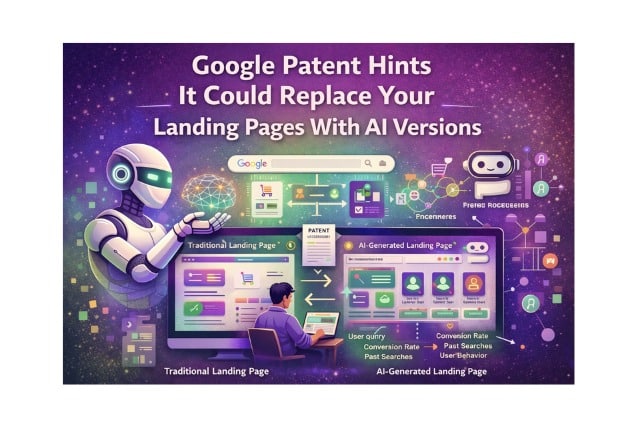
Did you ever notice that your carefully crafted landing pages lost traffic without a clear reason? Many marketers once believed that maintaining perfect layouts, persuasive copy, and targeted CTAs guaranteed stable conversions. They kept optimizing every element, yet results sometimes declined.
Later, a surprising discovery changed everything. A Google patent hints it could replace your landing pages with AI versions, making traditional strategies less reliable.
Suddenly, AI could create dynamic versions of your pages instantly, tailoring content to user intent. Marketers realized that understanding this shift early could determine which brands thrive in the AI-driven search era.
Search engines have evolved rapidly in recent years. Google explores instant personalized answers in results. Traditional landing pages lose their central roles in conversions.
First, learn that Google patent hints it could replace your landing pages with AI versions to stay relevant. So, this shift stresses AI-generated content based on queries and behavior.
Next, businesses rethink plans with content clarity and authority. Focus moves from static designs to strong signals.
Moreover, early adaptation keeps visibility and conversions strong. Brands thrive in AI-first search landscapes.
In short, Google patent hints it could replace your landing pages with AI versions, signaling major changes ahead.
What the Google Patent Actually Says: Breaking Down US12536233B1
Google filed the patent on January 3, 2025. Approval came on January 27, 2026. The number reads US12536233B1. It targets AI-generated landing pages. The title states an AI-generated content page tailored to a specific user.
Inventors include Caren Zeng and others. The system reviews your landing page first. It scores pages on key factors. Conversion rate shows sales success. Bounce rate tracks user exits.
In addition, click-through rate measures interest. Design and quality check the layout. Content quality reviews value. The score reveals page performance. Low scores exceed thresholds.
Google then builds an updated results page. A link leads to the AI version. Machine models process user queries. They add past search context. The output creates a custom page. Users gain better fits. Google fixes weak pages. Searchers receive improved results. Brands notice reach changes.
The patent centers on e-commerce areas. Product feeds appear frequently. Call-to-action buttons show in examples. AI chatbots guide users. Sitelinks point to details.
More so, the system pulls data from your site. It assembles new pages in real time. Searchers click the link. They reach the AI page instead. Original pages stay hidden.
Google aims for smooth flows. Poor pages frustrate users. AI bridges the gap. Experts track the trend. AI-driven user experience strengthens fast. Site owners watch developments closely.
How AI-Generated Landing Pages Would Work in Practice
A user types a query into Google. The system generates a standard results page and identifies the top landing page. Metrics such as conversion rate, bounce rate, and click-through rate determine whether AI will intervene. Pages below the threshold trigger updates. Google generates a link pointing to an AI-driven landing page.
The AI page includes:
- Dynamic product feeds and listings
- Call-to-action buttons for immediate conversions
- Chatbots answering user questions in real time
- Personalized headlines based on intent
- Filters and clusters to group related items
Machine learning models process user queries, past behavior, and account data. Embeddings create shared representations for predictions. Outputs include text, images, and sometimes audio. Dynamic page creation improves conversions, reduces bounce rates, and keeps users engaged.
Why Google Might Pursue This: Enhancing User Experience and Performance
Google pursues better search outcomes. Users demand quick answers. Poor pages delay progress. AI intervenes to assist. It removes spam pages. Low-quality sites drop spots. Instant answers satisfy users. Customization suits individuals.
More so, new users view the basics. Returning users explore depth. Loyal fans see preferences. Price-focused shoppers find deals. Context builds the structure. Search history directs choices. Location adds relevance. Preferences form views. Google improves ad results, too. Sponsored links strengthen. Conversions increase with tailored pages. Users engage more. Brands gain higher returns.
Therefore, AI search rise drives efforts. Tools like Gemini pioneer paths. Google experiments with features. Patents reveal directions. They file many yearly. Some launch as tools. So, this targets user satisfaction. Frustration fades away. Engagement remains high. AI-driven user experience triumphs. Site owners adapt rapidly.
Google identifies site weaknesses. Pages miss filters often. Users search for options. AI inserts them. Product clusters assist. Headlines align with queries. Paths speed up.
Purchases occur sooner. Google builds trust. Users return frequently. The patent addresses real issues. Search stays useful. Brands gain long-term advantages.
Key Scope and Limitations: Focused on Shopping, Ads, and E-Commerce
The patent primarily affects:
- Product pages and shopping feeds
- Ads and sponsored content
- Low-converting landing pages
Other website types remain largely unaffected. AI interventions occur only when scores fall below thresholds. Reliable, high-quality content provides the foundation for AI pages, while user context drives personalization. Limitations include query specificity, e-commerce focus, and gradual rollout.
Major Risks for Website Owners, Brands, and Publishers
AI-generated landing pages create risks:
- Loss of design and messaging control
- Declining traffic to original pages
- Attribution and conversion tracking challenges
- Copyright and content ownership issues
- Reduced affiliate revenue
- Potential misrepresentation of brand voice
Small sites face higher risks, while large brands may adapt more quickly. Ethical concerns, such as fairness and bias, require attention.
SEO and Digital Marketing Impact: Traffic, Ads, Funnels, and Visibility Shifts
SEO meets new guidelines. Traditional pages weaken. Optimization moves to AI feeds. Traffic redirects paths. Organic clicks decrease. Ads change. Funnels shorten. Users convert on AI pages. Visibility shifts to Google. Impressions gain importance. Search console monitors variations. Competition intensifies.
Thus, Google dominates the space. Marketers revise approaches. AI SEO strategies emerge as central. Semantic content optimization supports. Keywords decline in value. Intent steers actions. User journeys transform. AI directs steps. Brands strengthen signals. Entity-based SEO signals enhance trust. Pages require clean data.
Structured markup assists extraction. Digital marketing advances. Future of digital marketing AI guides directions. Ads target context. Personalized landing page AI captures users. Visibility depends on quality. Low scores end chances. Marketers test pages regularly. They fix weaknesses promptly. Impact reaches broadly.
How to Adapt and Prepare: Strategies for the AI-Generated Page Era
Marketers change priorities now. Build topical authority first. Clusters explore subjects deeply. Single pages prove insufficient. Optimize for AI extraction. Create clear information blocks. Structured data labels facts. Schema markup narrates content.
Internal links connect topics. Context signals strengthen. Entity-based SEO signals demonstrate value. Brands secure mentions. Author bios display expertise. External citations establish trust. Content suits summaries. Lead with main answers.
Therefore, short paragraphs ease reading. Lists organize points. Tables compare choices. Freshness maintains relevance. Update dates indicate currency. Multimedia boosts appeal. Alt text explains images. Transcripts support audio. AI pulls clean data. Test with AI tools. Identify weak spots fast.
Thus, fill gaps with facts. Iterate on outcomes. Measure fresh metrics. Impressions track success. AI visibility scores matter. Adapt constantly. Diversify sources. Email lists endure. Social media grows audiences. Prepare for the era. Strategies deliver results.
Is This Patent Likely to Become Reality? Timeline, History, and Reality Check
Google submits many patents yearly. Most remain theoretical. Some evolve into features. RankBrain launched from one. BERT followed the path. So, this patent originated in 2025. Grant occurred in 2026. Tests could begin soon. Rollouts demand years.
History reveals gradual changes. Voice search expanded slowly. AI overviews progressed step by step. Reasons to question full implementation. Antitrust scrutiny observes closely. Lawsuits hinder advances. User resistance impacts, too.
Ethics require caution. Full replacement invites backlash. Limits to ads appear logical. Shopping trials proceed first. Wider use delays. The timeline suggests 2027 experiments.
Full deployment by 2030, perhaps. Checks promote caution. Patents indicate paths. Not set plans. SEOs remain vigilant. Monitor Google announcements. Reality checks ease concerns.
Google Patent Hints It Could Replace Your Landing Pages With AI Versions | Risks, Controversies, and Ethical Concerns Around AI Landing Pages
Copyright problems head the concern. AI employs your content. Ownership disputes surface. Who claims the new page? Ethical discussions intensify. AI distorts facts occasionally. Misinformation circulates rapidly. Publishers protest strongly.
Theft perceptions rise. Affiliates suffer losses. Commissions disappear. Brands defend voices. AI introduces bias. Fairness suffers. Controversies escalate. Lawsuits loom ahead.
Regulators intervene next. Data privacy worries expand. User context reveals details. Consent proves vital. Small creators face impacts. Large firms gain dominance.
Ethical AI demands guidelines. Transparency fosters trust. Concerns mount high.
The Future of Landing Pages and Websites in an AI-First Search World
Landing pages transform quickly. AI assumes control. Websites redefine roles. Content supplies AI. Quality sources prevail. Authoritative sites maintain strength.
The future of digital marketing: AI directs paths. Conversion funnels contract. Users purchase on search pages. SEO evolves soon. Intent surpasses keywords. Semantic content optimization guides.
AI search personalization expands. Entities shape brands. Signals confirm worth. Websites reduce excess. Clean data secures pulls. Machine-first design emerges. Less clutter succeeds. User value remains core.
Ethics direct progress. Avoid thin content. Value creation ensures success. Resources support transition. Tools follow trends. Communities exchange advice. An AI-first world emerges. Sites adjust or decline.
Google patent hints it could replace your landing pages with AI versions. Prepare your brand today. View opportunities ahead, and remain competitive. Achieve with wise actions, and the future appears promising.
Frequently Asked Questions
What does the Google patent hint at about AI replacing landing pages?
The patent suggests AI generates dynamic page versions. It tailors them to intent and context.
Why might Google replace traditional landing pages with AI versions?
Google improves user experience. It reduces low-quality pages. It delivers instant answers.
How will AI-generated landing pages impact SEO and marketing strategies?
Marketers emphasize structured content. They build entity authority. They prioritize topical relevance over layouts.
Can businesses still control their brand messaging with AI-generated pages?
Yes, they create high-quality sources. They strengthen authority for accurate references.
What steps should marketers take to prepare for AI landing pages?
Focus on content clusters. Apply semantic optimization. Use structured data. Align with user intent site-wide.
Final Verdict
Lastly, the discovery that Google patent hints it could replace your landing pages with AI versions marks a new phase. Marketers cannot depend on traditional designs alone.
High-quality structured content and entity authority become vital. Adaptation now preserves visibility and conversions. Brands influence AI experiences effectively. Proactive businesses secure advantages.


 Presidents' Day Sale - 20% Off
  Groundhog Day Sale - 20% Off